
August 6, 2025
Real Estate Photography
HDR vs Flash Real Estate Photography: Pros & Cons
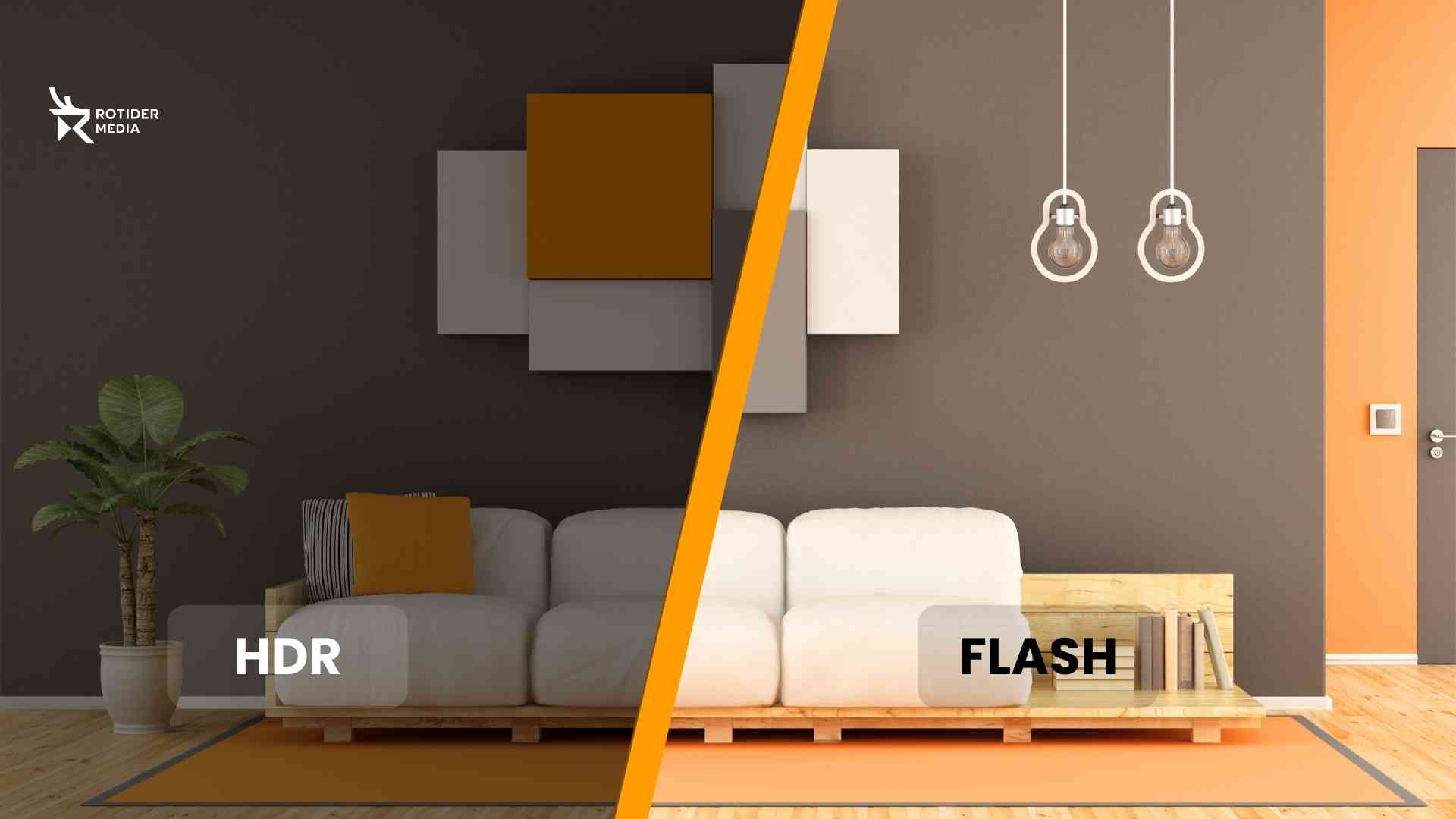
HDR vs Flash Real Estate Photography—which one truly makes your property stand out? Both techniques are widely used, but each offers distinct strengths in terms of lighting, color, and image quality. In this article, we’ll explore the pros and cons of both to help you choose the best approach for stunning real estate photos that drive results.
1. The Importance of Professional Real Estate Photography
According to the National Association of Realtors (NAR), 87% of homebuyers search for photos online before they start shopping for a home. This means that low-quality or poorly edited real estate photos can turn you away from potential buyers. Professional real estate photo editing is, therefore, crucial to attracting potential buyers and closing deals at a higher price.
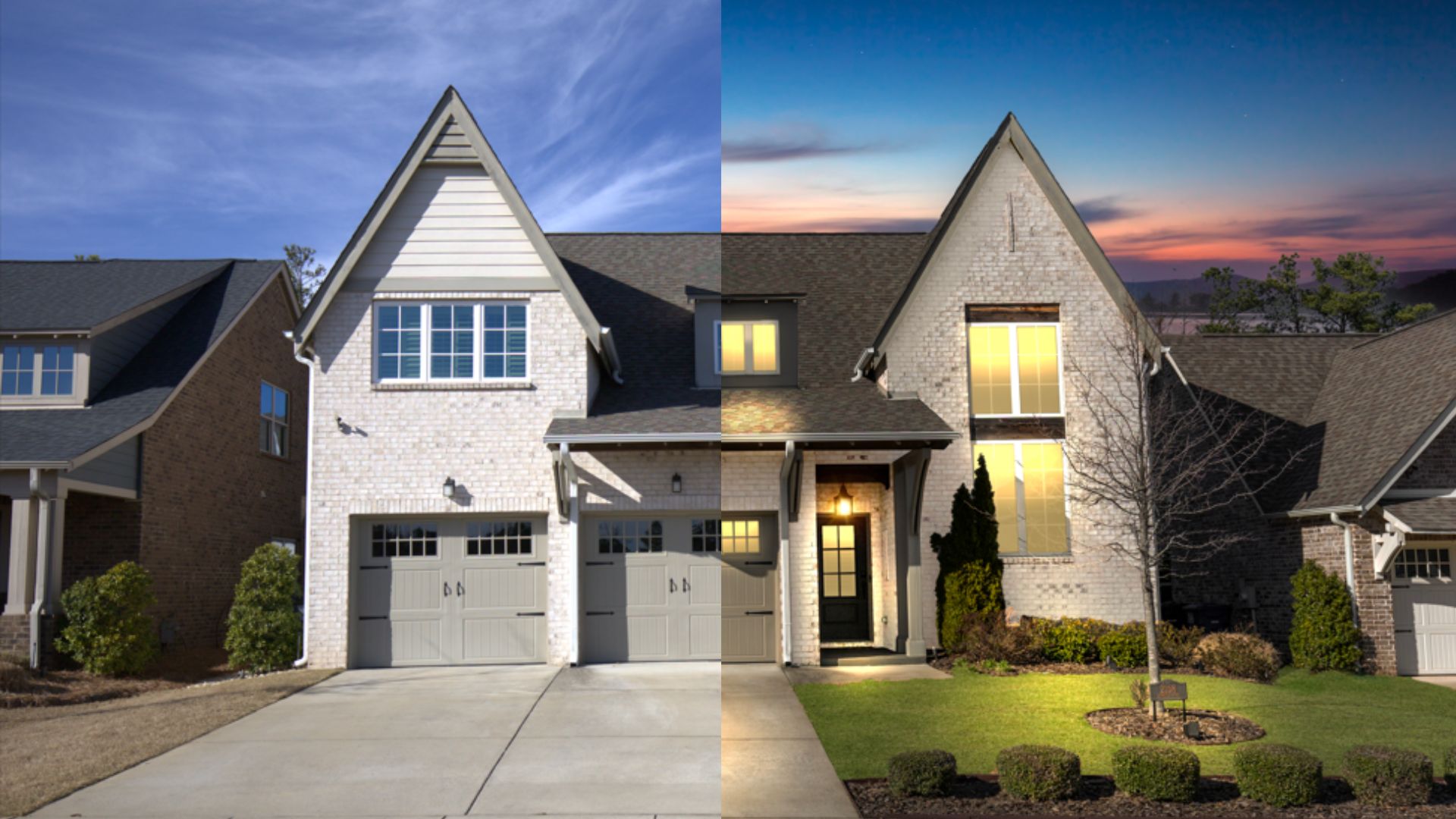
Here are some reasons why photo editing is important, especially in today’s competitive real estate market:
- Professional photos create strong first impressions: High-quality images instantly capture attention, encouraging users to click, explore, and schedule showings. Poorly lit or blurry photos can cause potential buyers to scroll past, no matter how great the property is.
- They help homes sell faster — and for more: Listings with professional photography often sell quicker and at higher prices. Clear, well-composed shots highlight a home’s best features and create a sense of value.
- They showcase each space in the best light: Whether using HDR to balance lighting or flash to create crisp clarity, professional editing ensures every room looks bright, clean, and spacious.
- They reflect professionalism and build trus: Quality images signal that the agent or seller takes their listing seriously. This builds credibility and encourages buyer confidence.
But great photography doesn’t just come from a good camera — it also depends on the right technique. From lighting balance to color accuracy, how a photo is captured and edited makes a big difference. Among them, HDR photo editing and flash photo editing are two popular techniques often applied to edit real estate photos.
2. HDR Real Estate Photography: Pros and Cons
HDR (High Dynamic Range) real estate photography is a technique that blends multiple exposures of the same scene to create a final image with balanced lighting and enhanced detail. Typically, photographers take 3 to 5 shots at different exposure levels — underexposed, correctly exposed, and overexposed — and merge them during editing. The goal is to ensure that both bright windows and dark corners are properly lit and visible in the final image.
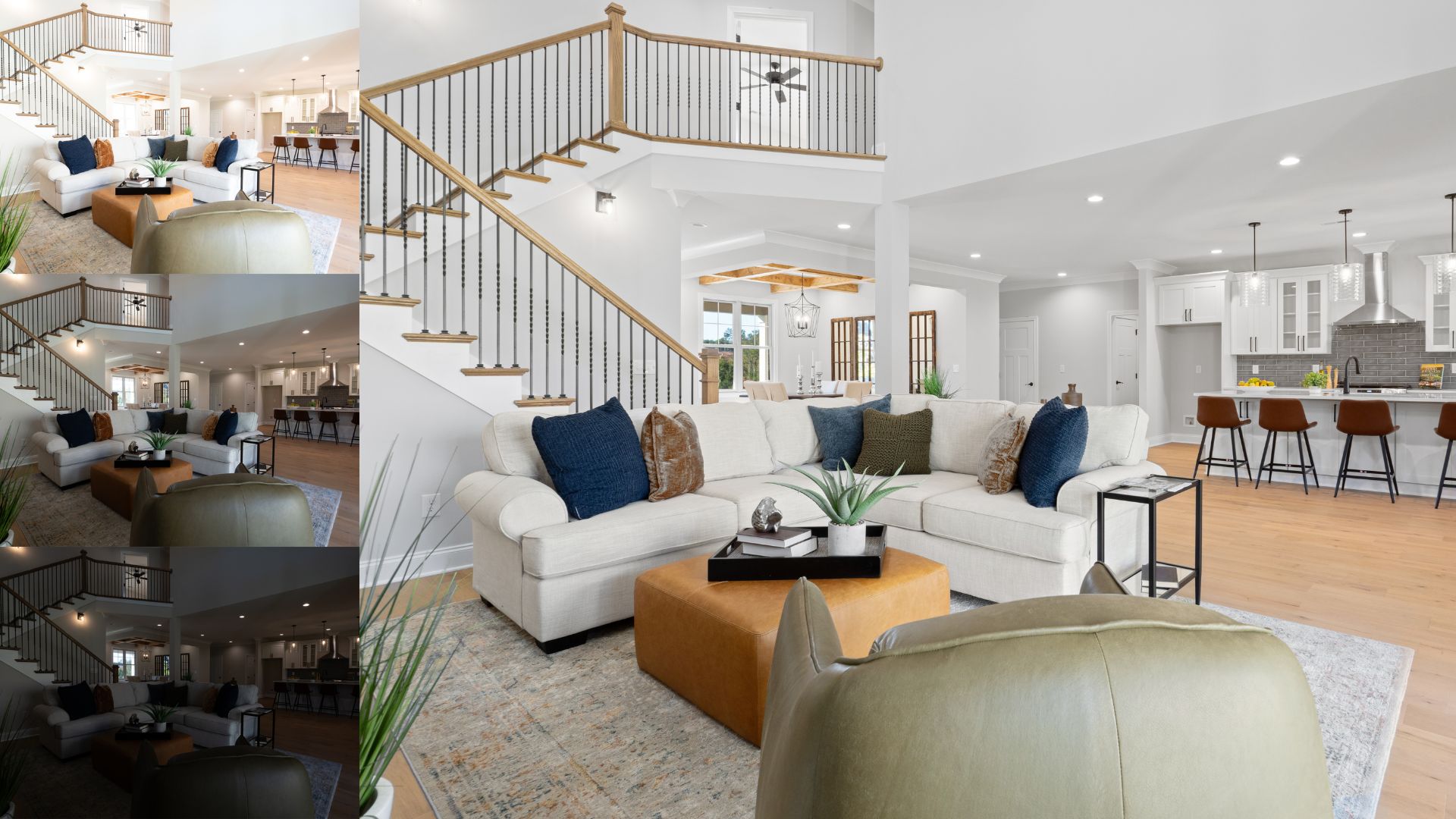
Pros of HDR Photo Editing for Real Estate
- Balanced lighting across the frame: HDR captures the full range of light and shadow, making interiors look bright and evenly lit — especially useful for rooms with mixed natural and artificial light.
- Enhanced details and textures: From floor finishes to ceiling moldings, HDR editing helps highlight small architectural elements that standard photos might miss.
- True-to-life colors: Proper blending ensures color accuracy and avoids overexposed highlights or overly dark shadows.
- Cost-effective and efficient: Compared to more complex lighting setups, HDR is faster to shoot and often more budget-friendly for standard residential listings.
Cons of HDR Photo Editing
- Can appear unnatural if overdone: Excessive saturation or contrast can lead to images that look artificial or over-processed.
- Ghosting and artifacts: If objects move between exposures (e.g., trees, ceiling fans), HDR blending may result in ghosting or blurry areas.
- Not ideal for all lighting conditions: Harsh sunlight or strong artificial lights can create glare or reflections that HDR can’t fully correct.
- Shooting silhouettes can be difficult: HDR may struggle with accurately rendering subjects or furniture placed in front of very bright light sources, resulting in silhouettes or loss of detail in those areas.
- Requires editing expertise: Without skilled post-processing, HDR images can suffer from halos, noise, or inconsistent tones.
3. Flash Real Estate Photography: Pros and Cons
Flash real estate photography involves using artificial lighting—typically off-camera flash units or strobes—to illuminate interior spaces during a photoshoot. Unlike HDR, which relies on combining multiple exposures, flash photography aims to get the correct exposure in a single shot by controlling light direction, intensity, and balance.
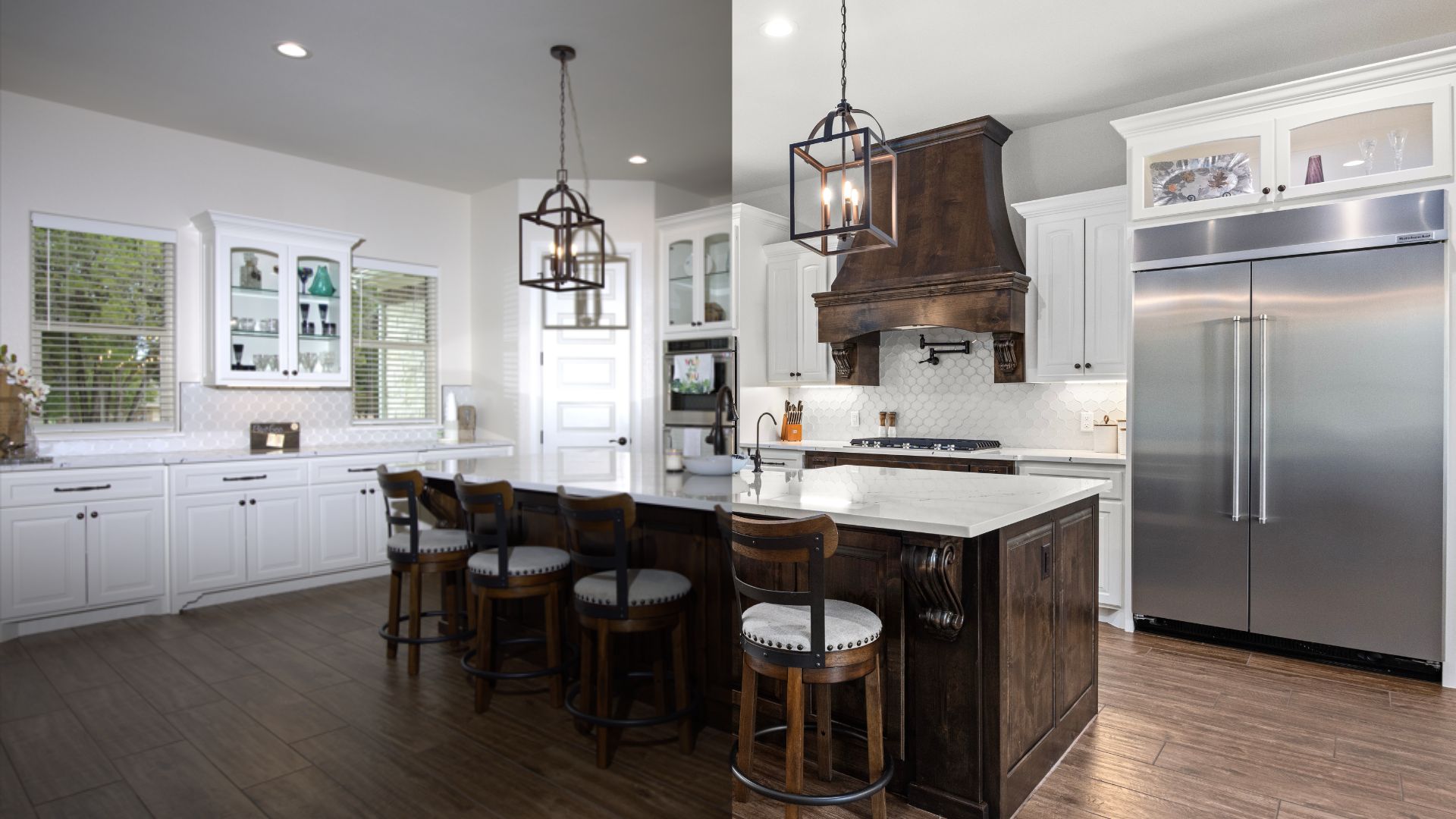
Pros of Flash Photo Editing for Real Estate
- True-to-life lighting and shadows: Flash helps mimic natural daylight, reducing color casting from indoor lights and creating a realistic, balanced ambiance.
- Sharper, high-quality images: Flash photos tend to be clearer and more detailed, especially in darker rooms where ambient light is limited.
- More control over lighting: Photographers can direct light exactly where it’s needed, minimizing blown-out highlights or deep shadows.
- Reduces window glare and reflections: With proper technique, flash can eliminate unwanted light bounce, making windows, mirrors, and shiny surfaces look cleaner.
- Ideal for luxury and editorial-style photography: Flash photography is often the go-to choice for premium listings that require magazine-quality images.
Cons of Flash Photo Editing
- Requires more equipment and setup time: Using off-camera flash, modifiers, and stands can slow down the shooting process, especially in tight or staged spaces.
- Higher skill requirement: Achieving natural-looking results with flash demands experience in lighting control, composition, and post-processing.
- More intensive post-editing: Even well-lit shots may need additional editing to remove shadows, balance color temperatures, or blend flash with ambient light.
- Can look harsh if misused: Poor flash placement or intensity can lead to harsh shadows, uneven lighting, or unnatural white balance.
4. HDR Photography vs Flash Photography: Which is Better?
When it comes to real estate photography, choosing between HDR and flash depends largely on your goals, property type, and desired aesthetic. HDR photography is ideal for standard listings that need fast turnaround, natural lighting balance, and cost-effective solutions. It works best in homes with a mix of window light and indoor lighting, especially in mid-range or rental properties.
On the other hand, flash photography delivers superior control over lighting and results in sharper, more polished images — making it the preferred choice for luxury listings, architectural shoots, or any property where image quality must meet premium marketing standards. Flash is especially useful in dark spaces or when you want to eliminate color casting from artificial lights.
Ultimately, the better choice isn’t one-size-fits-all. If you’re prioritizing speed and natural look, HDR might be the right fit. But if you’re aiming for editorial-quality images with full lighting control, flash photography is the way to go. In many cases, professional photographers even combine both techniques (a method known as flambient) to get the best of both worlds.
5. Professional HDR and Flash photo editing services at Rotider Media
Regardless of the technique used, editing real estate photos on your own can be time-consuming and technically challenging. Poorly handled edits can result in unnatural lighting, color distortion, or inconsistent quality across your portfolio. That’s why working with a professional photo editing partner like Rotider Media.
At Rotider Media, we offer specialized real estate photo editing services for both HDR and Flash photography, designed to meet the visual demands of today’s competitive property market. Whether you’re a real estate agent, photographer, or property manager, our expert editing team helps transform your raw images into stunning, market-ready visuals.
Professional photo editing services at Rotider Media:
Why do you choose Rotider Media?
- High-quality edits tailored to your style
- Fast turnaround time within 12 – 24 hours
- Reliable support for photographers and agencies
- Flexible pricing for bulk orders
- Special offer, HDR photo editing only $0.7/per for the first order. Only valid from July 18 to August 17. Contact us now to get the special price!!!

Annie Doo
Professional Video Editor
Hi, I’m Annie Doo, a professional video editor specializing in real estate post-production. Through hands-on experience with real-world projects, I’ve developed a strong understanding of visual storytelling, pacing, color, sound, and the workflows behind polished real estate videos. Here, I share practical insights, editing techniques, and production knowledge drawn from my day-to-day work in video post-production.
Was this article helpful?
Your feedback helps us create more useful real estate media guides.
Share this article


No Spam, Just Updates
Our fresh blogs provide technical and industrial information that helps strengthen your business. Sign up to be the first to receive the new updates
Related Posts
Real Estate Post-Production: A Complete Guide for Photographers and Media Teams
Oct 2, 2026
AI in Real Estate: A New Leap for Property Professionals
Sep 9, 2026
AI for Real Estate Marketing: A Practical Guide for Agents and Agencies
Sep 9, 2026
AI for Real Estate Agents: Practical Uses and Future Trends
Sep 7, 2026
15 Real Estate AI Companies to Know in 2026
Sep 5, 2026