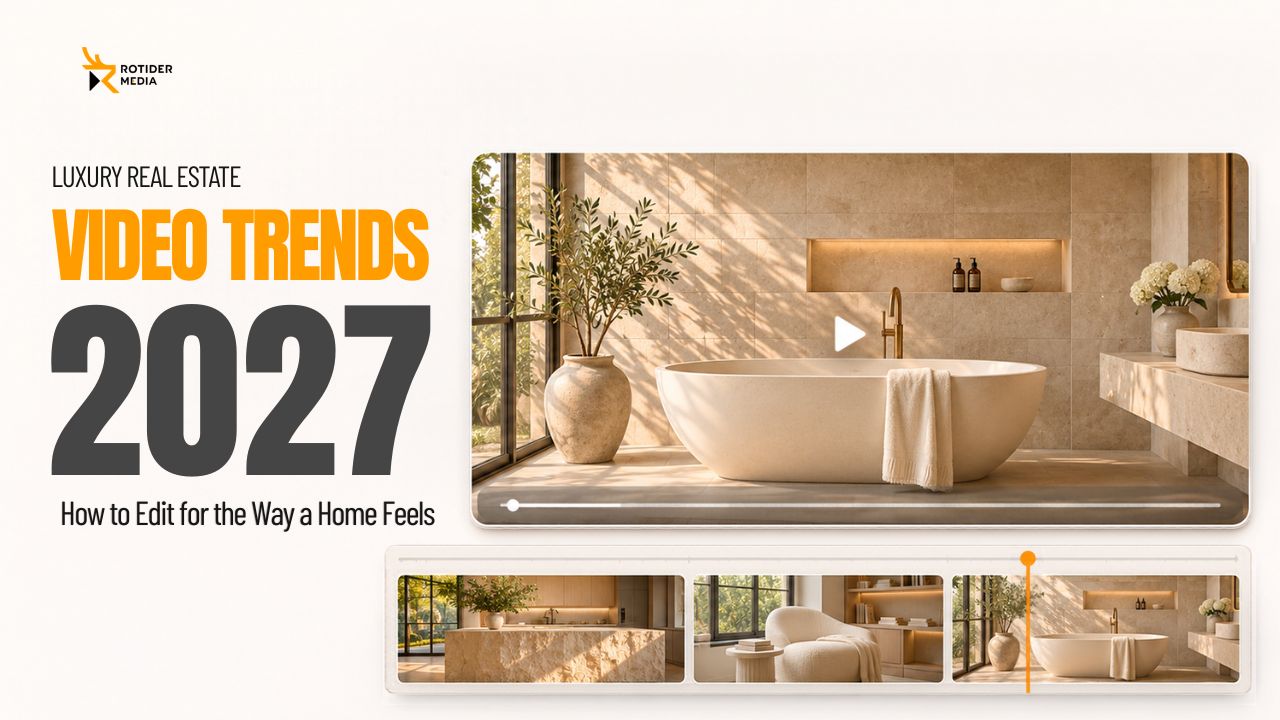
A spa bathroom, a quiet reading nook, and a custom kitchen can all look polished on camera. The challenge is giving each space a reason to be in the video. A close-up can show the texture of a stone wall; the right sequence can show where it is, how the light hits it, and why it matters to the room.
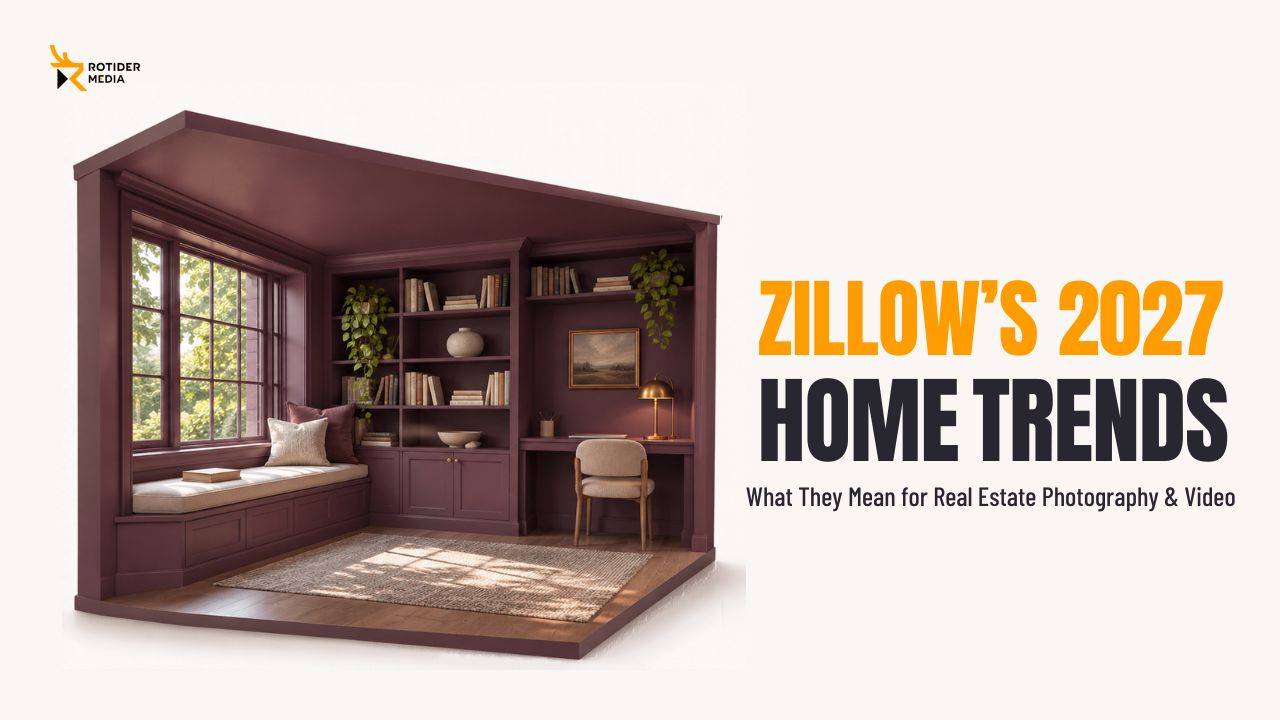
Zillow’s 2027 Home Trends Report gives agents and media teams a timely starting point. Here’s how to turn three features sellers are highlighting more often into a luxury listing video with a clear point of view.
What Zillow’s 2027 Home Trends Mean for Luxury Listing Videos
In Zillow’s 2027 Home Trends Report, mentions of elevated rose 71%, mentions of spa-inspired bathrooms rose 60%, and references to places to unplug rose 34%. Those figures track language in for-sale listings. They don’t tell us which video styles buyers prefer or whether a cinematic edit helps a home sell faster.
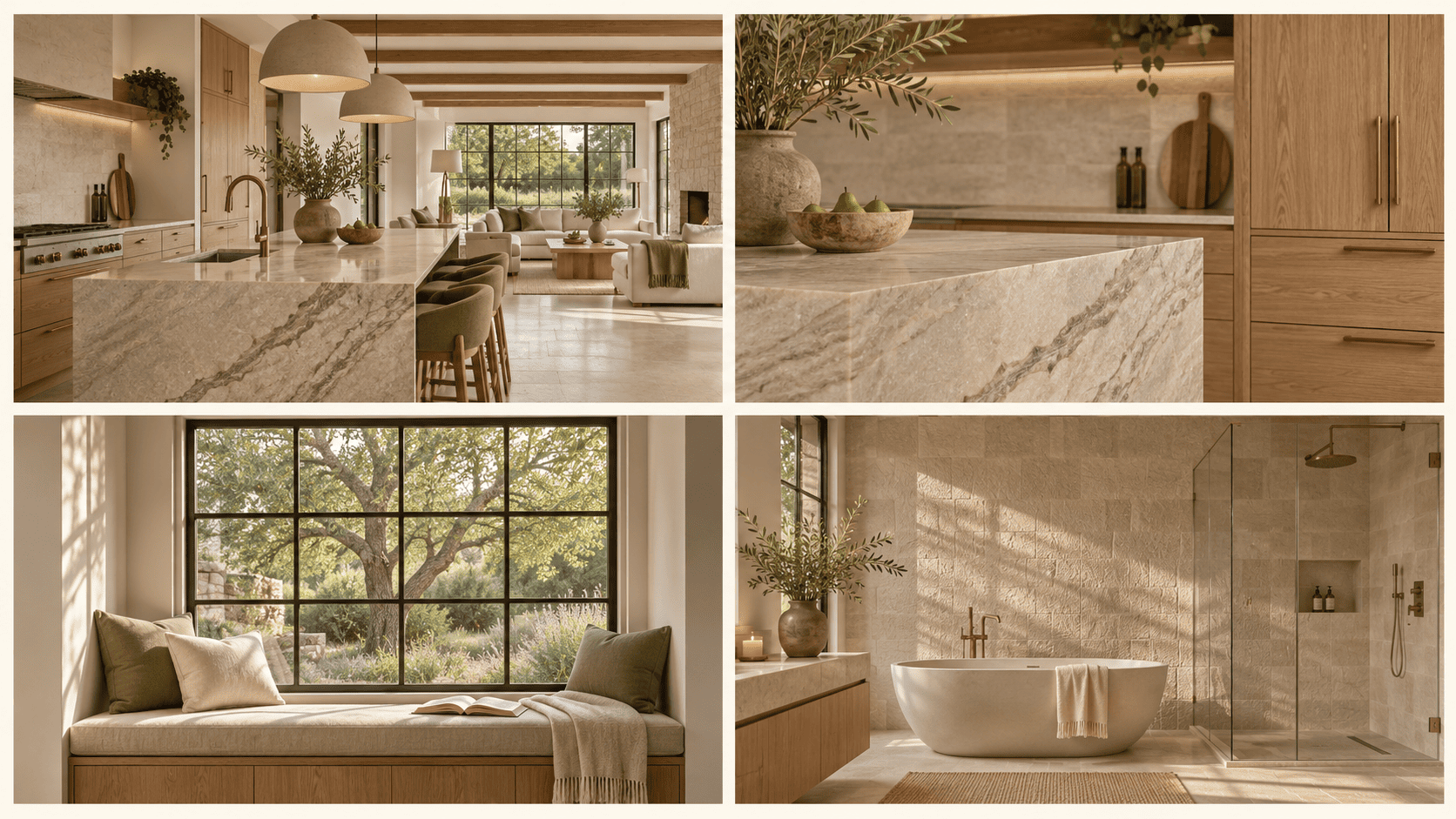
For a media team, the useful question is: What should the viewer notice about this home that a room-by-room tour might miss? If the strongest feature is custom craftsmanship, build the sequence around materials and construction. If it’s a quiet retreat, give the viewer enough time to see how the space feels. The same editing template won’t serve both equally well.
Build the Edit Around One Idea About the Property
Before choosing music or assembling a highlight reel, write one sentence that describes what the video should show. For example: “The home moves from an open kitchen built for hosting to quieter spaces at the back.” That sentence helps the editor decide which clips carry the story and which can go.
Here’s an illustrative sequence for a home with a custom kitchen, reading nook, and spa-inspired bath:
|
Sequence |
What to show |
What the edit needs to accomplish |
|
Open with the home’s strongest feature |
A view across the kitchen island toward the living area |
Show the relationship between the two spaces early. A tight shot of the countertop alone can’t explain it. |
|
Give the finishes a closer look |
A medium shot of the island, then a close-up of the stone or cabinetry |
Use the medium shot to connect the detail to the room. Match color across the cut so the stone reads as the same material. |
|
Shift the pace in the reading nook |
A steady view that includes the window and seat |
Hold long enough for viewers to notice how the daylight falls. Leave room in the soundtrack for the quieter moment. |
|
Show why the bathroom feels like a retreat |
A wide view that places the tub and shower, followed by a detail of the tile or fixtures |
Keep enough shadow for texture to register. Cut to the detail once viewers know where it belongs. |
Adapt the sequence to the actual property. If the reading nook and bathroom are on different floors, use a shot that establishes the change or treat them as separate moments. A smooth cut shouldn’t suggest a connection the footage can’t show.
Use Pacing, Color, and Sound to Support the Story
Give each shot enough time to do its job
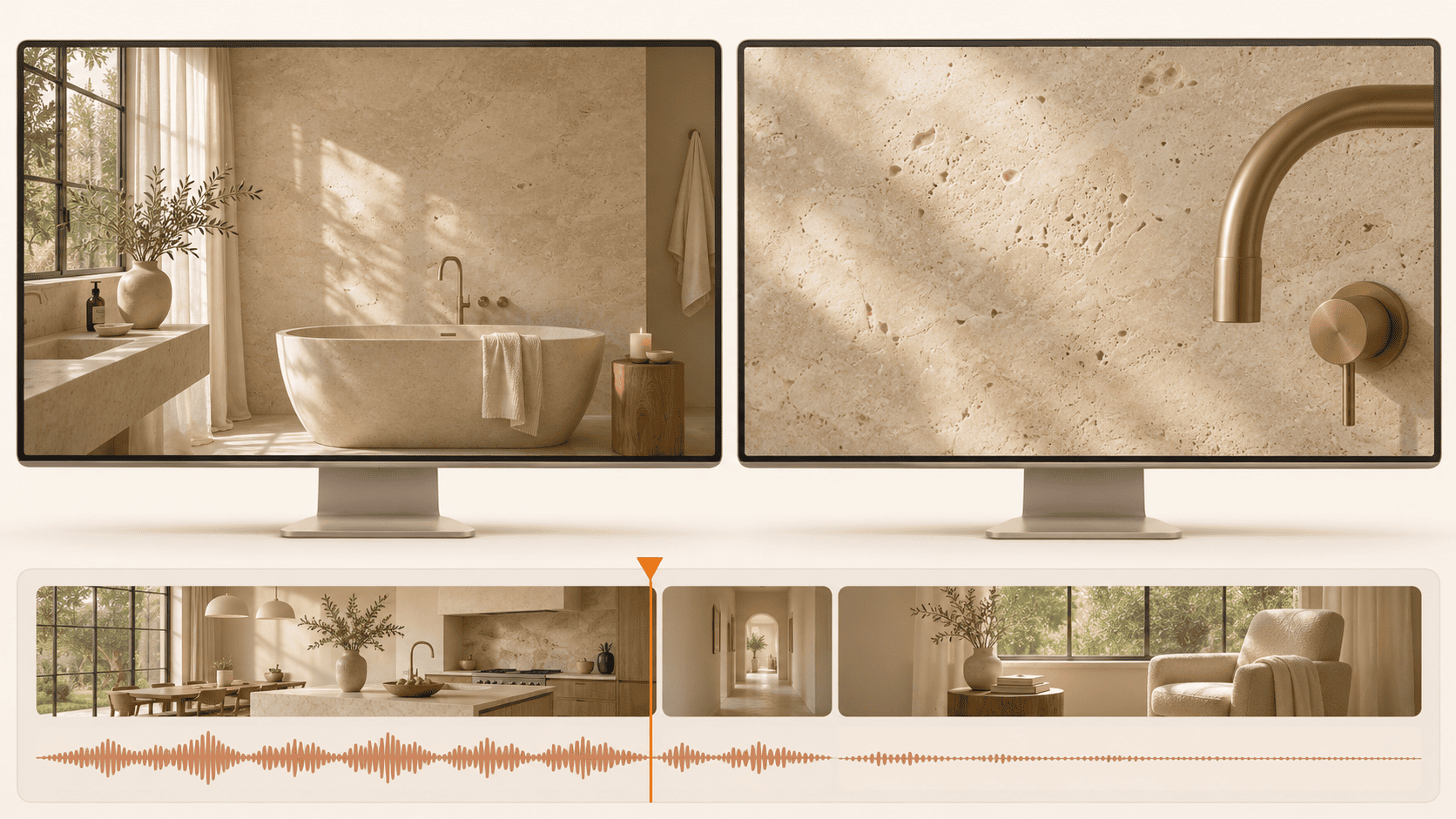
A wide shot needs time to establish the room. A detail shot needs enough time for a viewer to recognize the finish. A hallway clip may only need to show the turn that explains where the next room is. Review the first cut without music: if you can’t place a detail or follow the route, adjust the shot order before adding effects.
Match materials before setting the overall grade
A warm grade can suit a bathroom, but stone should still read as the same stone when you cut from a daylight wide shot to a close-up under a fixture. Compare the clips side by side, correct the mismatch where needed, then decide how warm or cool the sequence should feel. Keep natural differences in light when they help the viewer understand the room.
Let the soundtrack change with the space
The same musical intensity across the whole video can make an entertaining area and a quiet reading nook feel alike. Try easing the music back as the edit moves into a quieter space. If you have usable location sound, a brief moment of it can help the transition feel grounded. Use sound to support what the footage already shows.
What to Send Your Luxury Real Estate Video Editor
At Rotider, we’d rather build the first cut around one feature the viewer needs to understand than start from a list of effects. If a close-up looks great but no one can tell where it belongs, the fix is often a better connecting shot.
When sending footage for real estate video editing, include:
-
The story in one sentence: What should buyers remember about the property?
-
The clips that establish context: Send the wide and medium shots alongside the close-ups, including any doorway or turn that explains the layout.
-
One clear review note: For example, “Show the tub and stone wall together before the close-up. Keep the bathroom warm, but match the stone across both shots.”
Rotider can use that brief to build the sequence, match color across clips, and shape the pacing and soundtrack. If the footage doesn’t establish a connection, flag it before approving the cut. A missing shot is easier to address when everyone knows exactly what the viewer needs to see.
Readmore: Zillow’s 2027 Home Trends: What They Mean for Real Estate Photography & Video
Frequently Asked Questions
Does a luxury listing video need slow cuts?
No. Give viewers time to understand the layout or notice a finish, then trim footage that repeats information. A quiet room may benefit from a longer shot; a connecting hallway often needs less screen time.
Should a luxury listing video open with a drone shot?
Open with the shot that explains what makes the property distinctive. An aerial can be a strong opener when it shows the setting, grounds, or relationship to the water. If the strongest feature is the interior, start there.
Can one shoot produce both a luxury walkthrough and a short Reel?
Yes, if the footage supports both. The walkthrough should preserve the shots that explain how spaces connect. The Reel can focus on one feature and show it in a short sequence. If that feature needs a wide view, capture it in a composition that works vertically instead of assuming a crop will keep everything important in frame.