Video editing of real estate videos should be done such that the final video is short, smooth, well-structured, visually consistent, and focused on the property’s best-selling points. The best ways to edit a video include picking appropriate shots, steadying videos, adjusting colors, using smooth transitions, enhancing sound quality, and formatting the final product according to the specific platform used. In this article, we will dig deeper into all the tips for real estate video editing
What Should You Focus On In General When It Comes to Real Estate Video Editing?
When making a video, remember that the aim is not only to edit it effectively, but to ensure that the buyer will be able to understand and perceive it correctly. In general, the following features can be highlighted as crucial elements of an efficient video for real estate marketing purposes: high-quality video itself, proper order of walkthrough presentation, natural colors, smooth transitions, good sound, and correct format for uploading.
Why Does Real Estate Video Editing Matters?
It makes your videos more professional-looking
Even the best shot footage will fall flat when there is poor editing involved. It is not enough that your videos have great shots; their editing must match their quality too.
It allows you to emphasize the best aspects of the property
Editing gives you control over what viewers will notice, so you can focus on its most appealing aspects through timing, angles, and sequencing.
It increases viewer engagement
When your videos are engaging enough, you know that viewers will be engaged for much longer. Proper editing ensures that viewers stay glued to your video from beginning to end.
It maximizes marketing potential
Well-edited videos have the ability to attract and retain views from potential buyers wherever they appear online.
Overall Guidance for Beginning Editors
Editing an estate video is not simply putting a bunch of clips together; it’s making sure that the presentation of a house is the clearest and most appealing one. From building an organic flow through the house to working on the aesthetics, sounds, and timing, each move made during the editing process will make a difference when it comes to the way viewers see the property. Before getting into the detailed tips, let’s have a look at the easier parts.
- For amateurs, concentrate on creating clarity and organization by choosing the best shots and organizing them in the proper walk-through sequence. Limit video clips to 2–3 minutes, do not go overboard on special effects, and create an appealing thumbnail.
- For quality video production, create a good variety of wide, medium, and close-up shots. Steady the footage, color correct it, and use simple but effective transitions. Use a steady frame rate (24–30 frames per second).
- For storytelling, edit the video to make it seem more authentic and include close-ups that emphasize essential elements of the property. Tell the truth and address the interests of your target audience.
- For engagement, place calls to action as soon as possible within the video. Use text overlays for highlighting important selling points, appropriate background music, and other means to engage viewers.
- For platform optimization, use a 16:9 ratio for YouTube and websites and a 9:16 ratio for Instagram and other similar platforms. Also, keep videos less than 200MB in size using MP4 (1080p).
18 Detailed Real Estate Video Editing Tips
To save time, we’ll get straight to the 18 real estate video editing tips for those who want to transform their videos into engaging and captivating marketing content. These 18 tips have been distilled from the experience of editing thousands of real estate videos by the editorial team at Rotider Media.
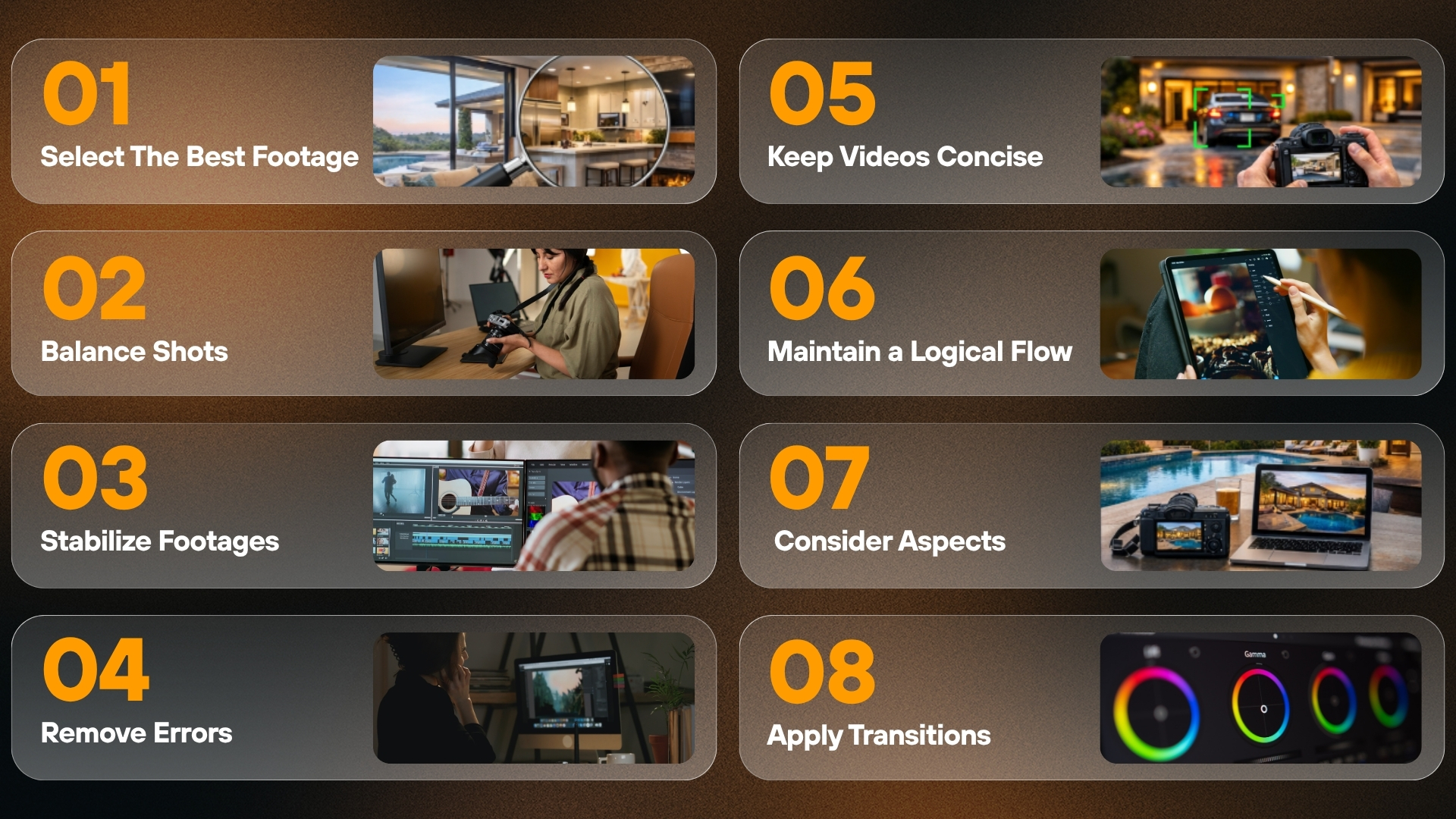
1. Select and Arrange the Best Footage to Showcase Each Room
Editing starts with choosing the highest-quality clips that best represent each space. Review all the footage carefully and pick shots that clearly highlight the room’s size, features, and flow. Arrange these clips in a logical order to simulate a natural walkthrough—from the entrance through living areas, kitchen, bedrooms, and so on. This careful selection and sequencing allow viewers to visualize the home effectively without feeling overwhelmed.
2. Balance Wide, Medium, and Close-Up Shots During Editing
In post-production, balance the mix of wide, medium, and close-up shots to craft a compelling narrative. Use wide shots to establish the setting and spatial context, medium shots to emphasize room layouts, and close-ups to draw attention to unique details like textures or finishes. Adjust the timing of each shot to maintain viewer interest, ensuring that no single type dominates and the story flows smoothly.
3. Stabilize Footage and Enhance Image Quality
Shaky video footage can deter potential buyers quickly. Employ video stabilization tools during editing to achieve smooth, professional visuals. Additionally, fine-tune image quality by adjusting color balance, contrast, and brightness to present the property in its best light. Well-stabilized and color-corrected footage is critical for conveying a high-quality, trustworthy impression.
4. Remove Errors Without Concealing Flaws
Edit out distracting imperfections such as jittery clips, abrupt jerks, or awkward transitions to enhance video quality. However, never manipulate footage to hide genuine defects in the property. While it might seem harmless, this practice is unethical and could expose you to legal risks. Maintain clarity and honesty in your presentation.
5. Keep Videos Concise and Engaging
Viewer attention spans are limited, with many dropping off after one to two minutes. Aim for videos lasting between two and three minutes, delivering key information promptly. Include a clear call to action early, such as “Schedule a viewing before it’s gone!” Optimize file size to facilitate quick uploading and sharing by compressing videos under 200 MB and using MP4 format at 1920×1080 resolution.
6. Maintain a Logical and Smooth Flow
A coherent narrative structure is fundamental in real estate video editing. Ensure each scene transitions naturally to the next, telling a clear and engaging story without jarring cuts or confusing edits. The video should simulate the feeling of physically walking through the property. Even if the raw footage was shot out of order due to staging or construction, thoughtful editing can create a seamless viewing experience.
7. Consider Frame Rate, Playback Smoothness, and Pacing
Professional real estate videos feel fluid and polished. Use a consistent frame rate—preferably 24 or 30 frames per second—to avoid choppiness. Balance transition speed to reflect the natural pace of someone exploring the home. If too fast, viewers may miss details; if too slow, they may lose interest.
8. Apply Subtle, Stylish Transitions
Transitions connect the shots and influence the video’s tone. Choose effects that complement the property’s style and overall mood, such as gentle fades or wipes. Avoid flashy or overdone transitions that distract from the content. Well-executed, understated transitions maintain professionalism and keep viewers engaged.
9. Select Appropriate and Engaging Music
Music sets the emotional backdrop and enhances memorability. Choose background tracks that align with the property’s character—energetic tunes for modern apartments or soothing melodies for tranquil suburban homes. Ensure the music supports rather than overpowers the visuals. A thoughtfully selected soundtrack can significantly impact viewer connection.
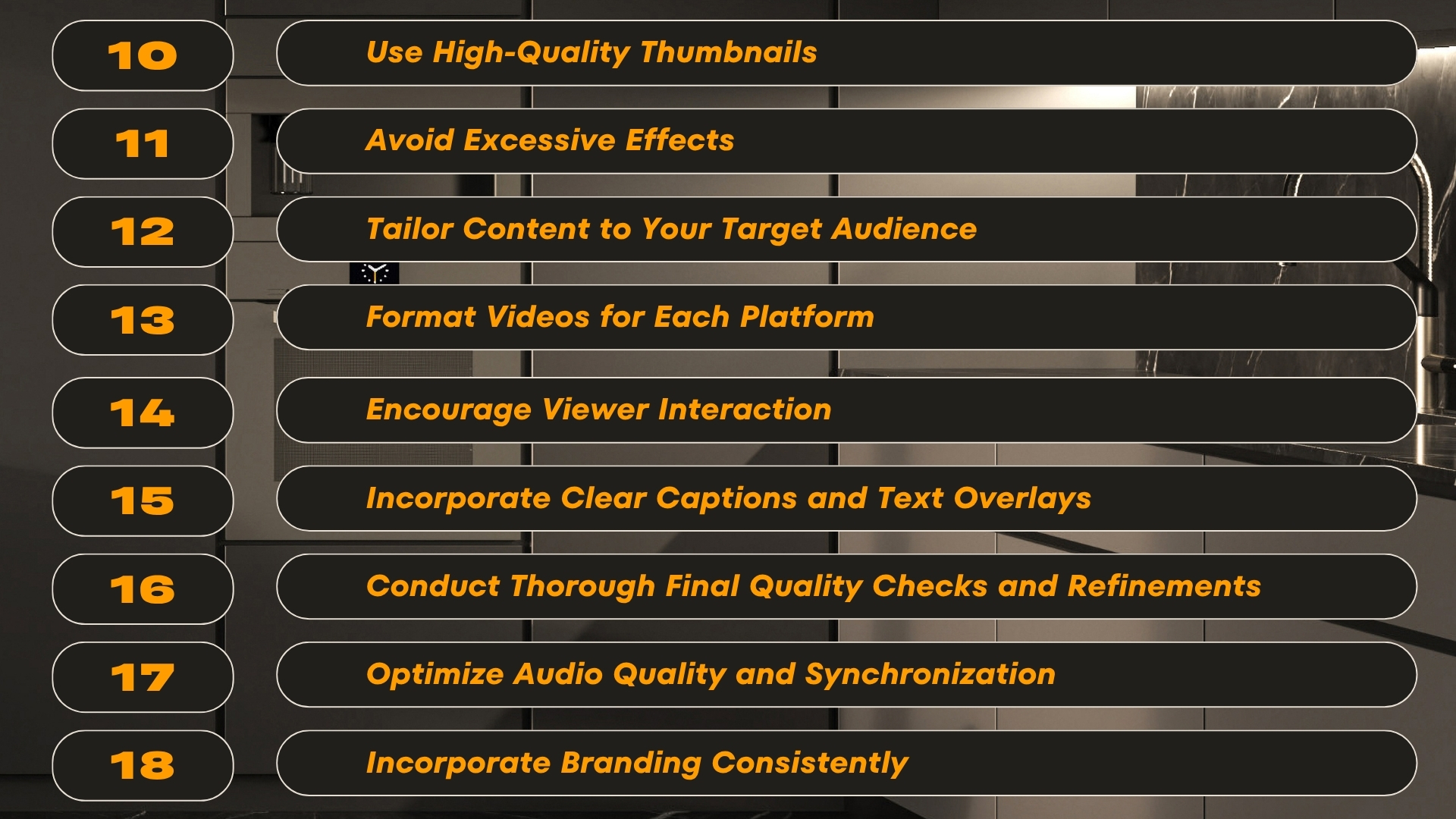
10. Use High-Quality Thumbnails
Before clicking, viewers judge whether to watch based on the thumbnail. Select clear, attractive images showcasing the property’s best features—be it a sunlit living room, a modern kitchen, or a stunning exterior shot. A compelling thumbnail boosts click-through rates and draws more viewers.
11. Avoid Excessive Effects
While effects can enhance aesthetics, overusing flashy filters or transitions diminishes professionalism. Opt for simple color correction to brighten and clarify footage, maintaining a clean and elegant look without distractions.
12. Tailor Content to Your Target Audience
Understand who your viewers are—potential buyers, real estate agents, or investors—and customize your storytelling accordingly. Highlight unique property features and neighborhood benefits relevant to their interests. This approach not only grabs attention but also fosters an emotional connection, making the property more memorable.
13. Format Videos for Each Platform
Different social media and web platforms favor different formats:
- Landscape (16:9) is ideal for YouTube, Facebook, and real estate websites, providing full property views on larger screens.
- Portrait (9:16) suits Instagram Reels, Stories, and TikTok, optimizing vertical phone viewing with quick highlights or teasers.Optimizing format ensures your videos look great and perform well wherever they’re shared.
14. Encourage Viewer Interaction
Don’t just post and forget. Engage your audience by asking questions in captions or during the video, such as “What do you think of this kitchen?” or “Could this be your dream backyard?” Invite comments or messages for more information. Including brief interviews with homeowners or agents adds a personal touch. Simple calls to action like “Contact us for a private tour” help convert viewers into leads.
15. Incorporate Clear Captions and Text Overlays
Use captions and text to provide context and emphasize key selling points. Label sections (“Newly Renovated Kitchen,” “Spectacular Ocean Views”) to guide viewer focus. This improves comprehension and keeps attention on the property’s highlights. Avoid excessive or distracting text that competes with the visuals.
16. Conduct Thorough Final Quality Checks and Refinements
Before finalizing, review the entire video to catch technical glitches, inconsistencies, or areas needing improvement. Monitor audio balance, text placement, color grading, and overall aesthetic. Adding subtle finishing touches like a tasteful watermark logo can elevate professionalism. Your goal is a polished, cohesive video that effectively markets the property.
17. Optimize Audio Quality and Synchronization
High-quality audio significantly enhances viewer engagement and professionalism. During editing, ensure that any voiceovers, interviews, or ambient sounds are clear, balanced, and free from background noise. Synchronize audio precisely with video to maintain natural timing, especially when showcasing walkthroughs or commentary. Use audio compression and equalization tools to smooth out inconsistencies and enhance the overall listening experience.
18. Incorporate Branding Consistently
Adding subtle, consistent branding throughout your video reinforces your company’s identity and builds trust with viewers. This can include a tasteful logo watermark in a corner, branded intro and outro sequences, and consistent use of fonts and colors that align with your brand guidelines. Consistent branding elevates the video’s professionalism and helps prospective clients remember your services.
Common Real Estate Video Editing Mistakes to Avoid
The video is too long
People have short attention spans. Lengthy and repetitive videos will bore viewers, leading to losing the viewers at critical times when showing the most essential aspects of the house.
Use too many distracting transition effects
Too many distractions in your video may lead viewers away from focusing on the real house itself. The best way is to use smooth transitions in videos.
Over-editing the color of your video
The buyer expects that everything is realistic. Using overly saturated colors may make the house seem unreal. Stick to the natural tone of the space.
Creating a confusing room sequence in the video
A disorganized video does not help in understanding the space. A good video should be logical, helping viewers to easily follow the space.
Exporting an inappropriate version of the video
Platforms differ in their specifications. One export cannot be used across all the platforms. This can affect the video’s performance and visibility.
Overlooking audio quality
Poor quality audio can make the video unattractive, especially due to distracting noises like background music. Good sound quality adds credibility.
Should You Outsource Real Estate Video Editing?
If you’re pressed for time or aiming for a more refined finish, consider hiring experts who specialize in Real Estate Video Editing Services. These professionals have the skills to expertly cut, edit, format, and enhance your videos to achieve maximum impact. Outsourcing this task not only eases your workload but also guarantees a polished, professional final product that stands out across all platforms.
Rotider Media is a professional outsourcing provider specializing in real estate video editing services. We are committed to meeting even the most demanding client requirements with absolute perfection. Backed by a team of experienced experts and a well-structured workflow, Rotider Media delivers high-quality, polished, and engaging real estate videos on time—often exceeding expectations. Choosing Rotider Media means you can fully trust in our efficiency, professionalism, and creativity for every video editing project.
FAQs About Real Estate Video Editing
What is the ideal length for a real estate video?
Most real estate videos perform best between 60 and 120 seconds. This is long enough to showcase key areas of the property while keeping viewers engaged, especially on listing platforms and social media.
How do you make a real estate video look more professional?
Focus on the fundamentals: stable footage, clean cuts, natural color correction, and a logical flow that mirrors a real walkthrough. Avoid overusing effects; simple, polished editing almost always looks more professional than flashy visuals.
What is the best format for real estate videos?
It depends on the platform. Horizontal (16:9) works best for listing websites and YouTube, while vertical (9:16) or square formats are more effective for social media like Instagram and TikTok. Export settings should be optimized for each platform to maintain quality and performance.
Should real estate videos include music and text overlays?
Yes, but keep them subtle. Background music can enhance the viewing experience, and minimal text overlays can highlight key features. Just make sure they don’t distract from the property itself.
Is outsourcing real estate video editing worth it?
For many professionals, yes. Outsourcing can save time, improve consistency, and help scale production without increasing internal workload—especially when working with specialized teams that understand real estate content.
Conclusion
Well-crafted real estate videos have the power to make your listings truly stand out and attract greater interest. Investing time in thoughtful editing ensures the property is showcased at its best while maintaining transparency. By keeping your videos clear, authentic, and engaging, you’ll hold viewers’ attention and inspire action. With these expert tips, you’re well-equipped to produce compelling videos that draw more potential buyers to your doorstep.
To implement these real estate video editing tips effectively and efficiently, you might consider hiring professional outsourcing services — a choice that will surely satisfy your needs.