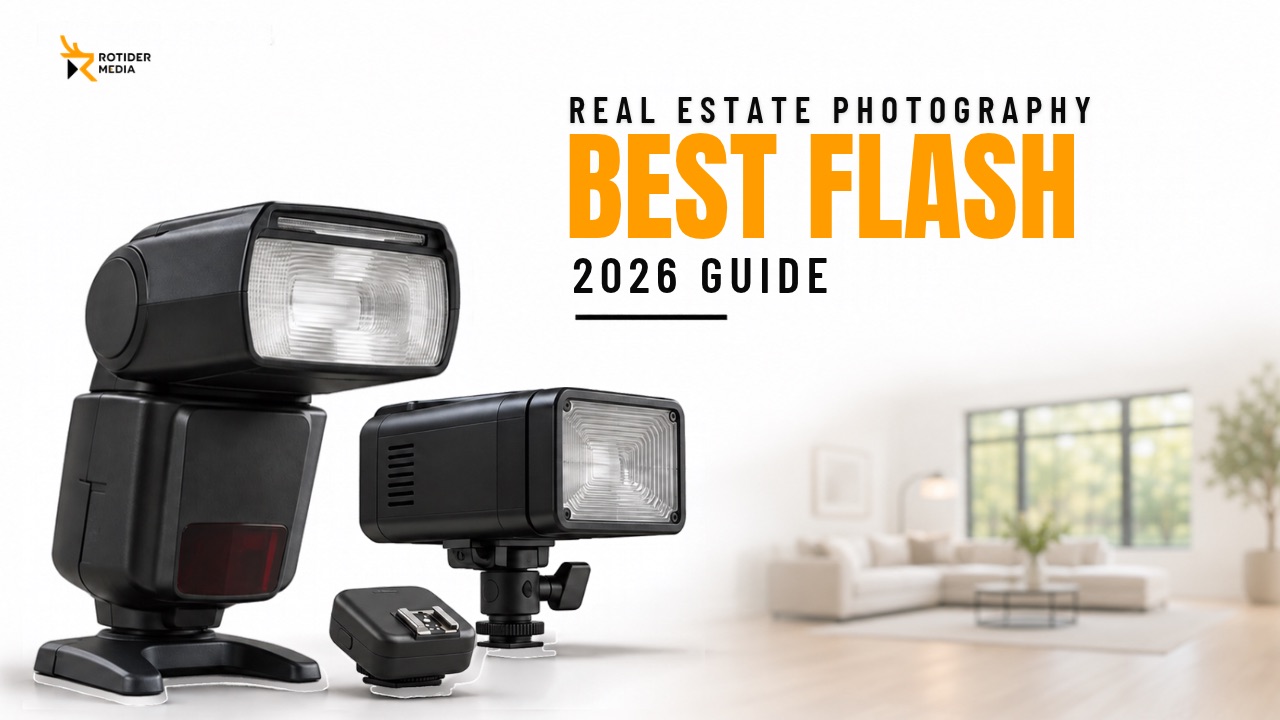
Selecting the best flash for real estate photography comes down to your lighting requirements, setup style, and recycle time preferences. Compact speedlights are ideal for lightweight, highly mobile shooting, whereas battery-powered strobes excel when high output is needed for bounce lighting across wide rooms.
This guide compares three popular Godox lighting setups tailored for different production levels, detailing camera compatibility, power options, and total system costs. All recommendations are based on standard manufacturer technical specifications.
Best Flashes for Real Estate Photography at a Glance
Start by choosing the type of lighting system that suits your work. Speedlights can operate on or off the camera; “off-camera” describes placement, not a separate category of flash.
|
Flash |
Type |
Best suited for |
Control and power supply |
Main consideration |
|
Godox TT600 |
Manual speedlight |
Photographers building a straightforward manual lighting kit |
Manual output; four AA batteries; built-in Godox X radio |
No TTL; check camera and trigger compatibility |
|
Godox V860III |
TTL speedlight |
Photographers wanting a rechargeable speedlight with manual and automatic control |
Manual and TTL; lithium-ion battery; Godox X radio |
Select the correct camera-system version |
|
Godox AD200Pro II |
200Ws pocket strobe |
Photographers building a dedicated off-camera lighting setup |
Manual and wireless TTL with compatible equipment; lithium-ion battery |
Requires suitable mounting and a compatible triggering method |
These are use-case recommendations rather than a universal ranking. The TT600 prioritizes manual simplicity, the V860III offers a more versatile speedlight workflow, and the AD200Pro II provides a different output and accessory platform. Manufacturer documentation confirms their respective features.
Best Flashes for Real Estate Photography
Godox TT600
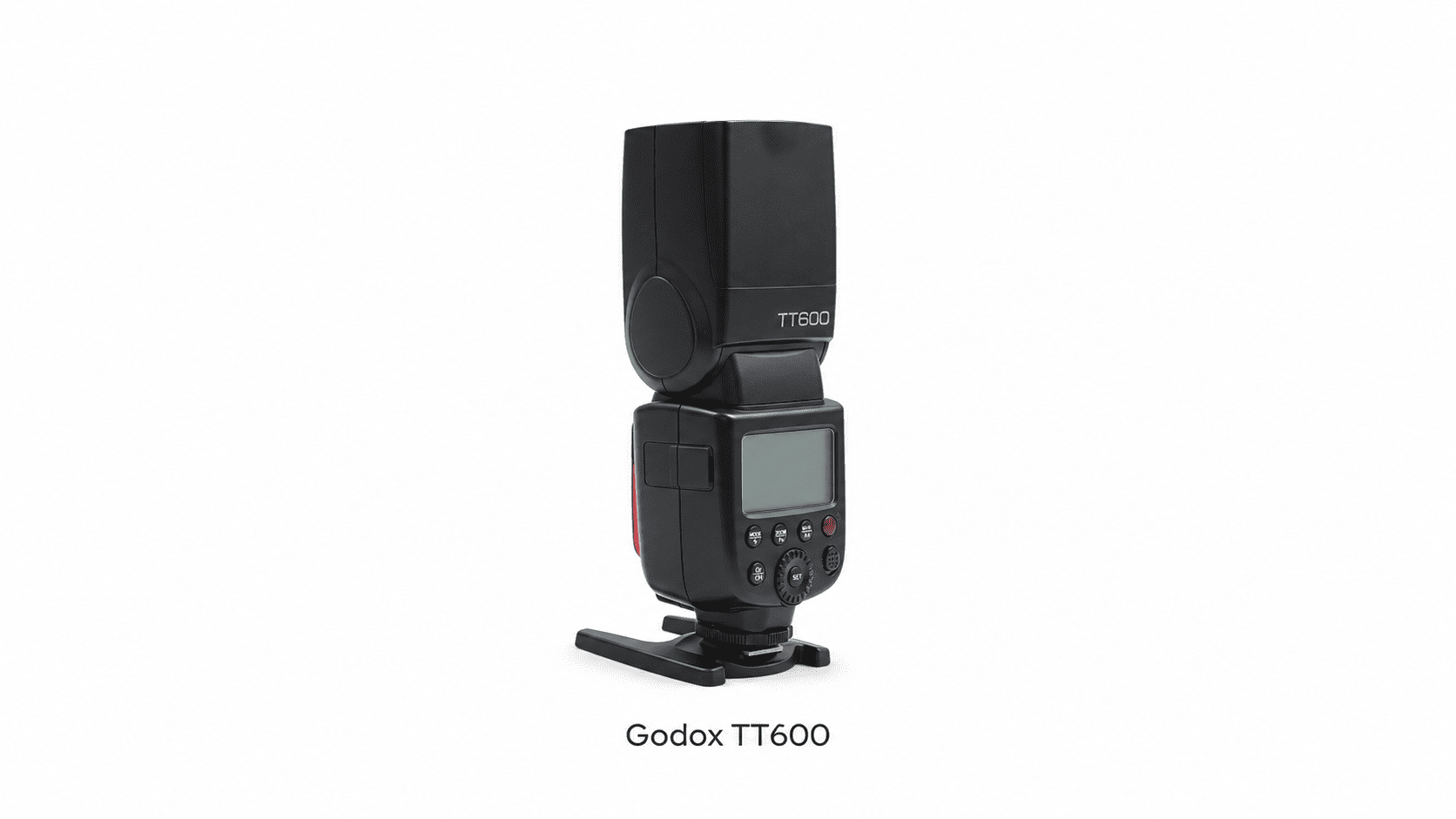
The Godox TT600 is a practical budget option if you prefer full manual light control over TTL automation. Equipped with the built-in Godox 2.4G Wireless X System, it allows effortless off-camera triggering when paired with a compatible transmitter.
Godox rates the flash at GN60 (m ISO 100 at 200mm), though this guide number reflects a narrow zoom setting rather than the wide coverage typically needed for bouncing light indoors. Powered by four AA batteries, it delivers a recycle time between 0.1 and 2.6 seconds.
For property photography, this manual setup offers consistent light output across exposures, allowing precise adjustments as you reposition lighting between rooms.
The main trade-offs are the lack of TTL support and the need to manage extra AA batteries. Choose this model if you value simple manual operation and cost efficiency over lithium-powered convenience.
Godox V860III
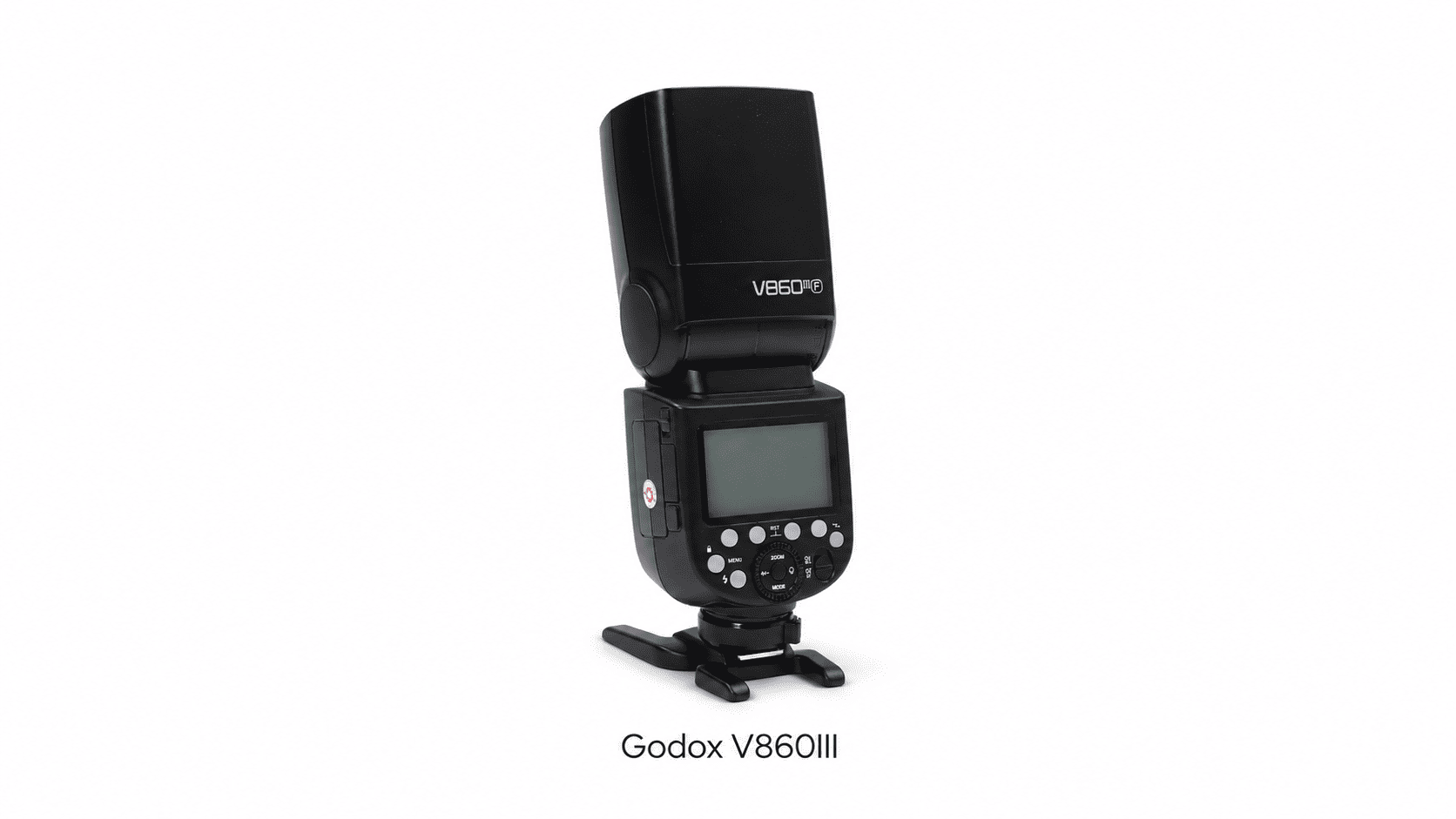
The Godox V860III is a solid step up for creators who need a lithium-powered speedlight for real estate shoots and general media work. It supports full manual output control, camera-specific TTL autoflash, and the integrated Godox 2.4G Wireless X System.
According to Godox specifications, the Nikon-compatible version delivers up to 480 full-power flashes per charge with a 1.5-second recycle time. In real-world property shoots, actual battery endurance varies based on power settings and bounce distances.
Having both manual and TTL modes offers distinct advantages when transitioning between interior rooms, agent headshots, and hybrid event assignments. For static architectural spaces, switching to manual mode guarantees consistent exposure levels across bracketed frames.
Be sure to select the dedicated version matching your camera system. The decision to invest in this model over a basic manual speedlight comes down to operational convenience and fast battery recycling rather than expecting TTL to magically improve interior photo quality.
Godox AD200Pro II
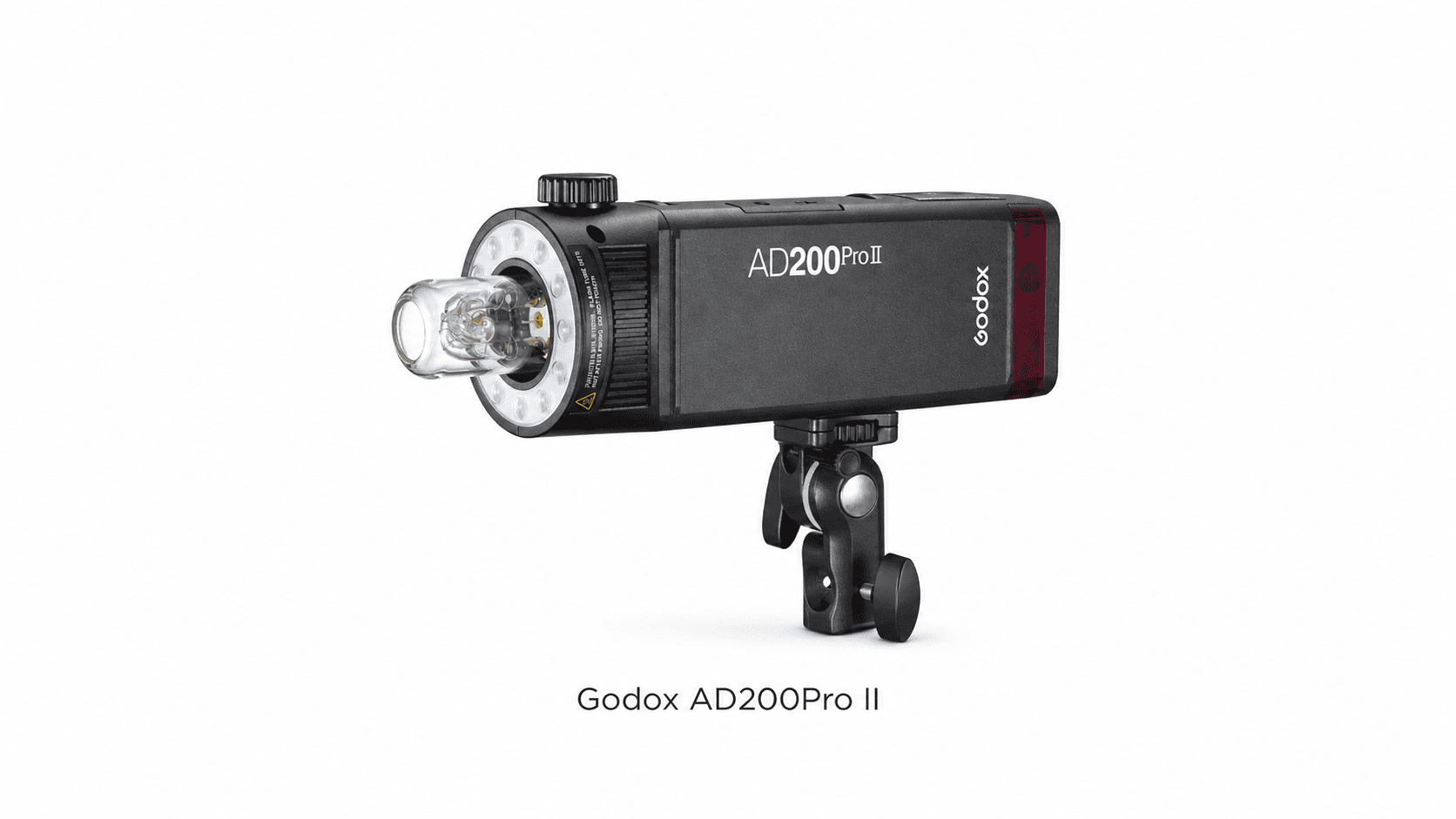
The Godox AD200Pro II is a portable 200Ws battery-powered flash featuring interchangeable head options. Designed primarily as an off-camera lighting unit, it is built to be mounted on light stands rather than directly onto a camera hot shoe.
Godox technical specs list a wide power control range from 1/512 to 1/1, delivering up to 500 full-power flashes per charge with recycle times between 0.01 and 1.8 seconds. It fully integrates with the Godox 2.4G Wireless X System. Keep in mind these ratings stem from standard factory testing, so real-world performance will shift depending on flash power levels and shooting pace.
Consider this model when building a dedicated setup that demands high modifier versatility. When weighing overall portability and investment costs, remember to factor in essential accessories like mounting brackets, light stands, wireless triggers, and softboxes.
The main tradeoff when choosing a speedlight vs strobe real estate workflow is the extra setup time and equipment needed on location. Investing in a high-powered unit like the best strobe for real estate photography only makes sense if it solves recurring lighting limitations. If your current portable flash setup provides adequate coverage without slowing down your site workflow, upgrading to a larger strobe system may not yield significant immediate benefits.
Speedlight or Strobe for Real Estate Photography?
Choose according to the lighting result you need at your normal camera settings. Room size alone does not determine the answer: ceiling height, bounce-surface color, light placement and the contribution of daylight all matter.
When a Speedlight Is Enough
A speedlight can be sufficient when you have a usable bounce surface and can achieve the intended exposure without repeatedly pushing the unit to its limit.
A nearby white wall or ceiling can help redirect the light. However, colored surfaces can introduce a color cast, and a distant reflecting surface increases the distance the light must travel. Nikon’s explanation of bounce flash illustrates these effects.
Before buying a more powerful unit, test another position or bounce direction. The problem may be where the light is going rather than the capacity of the flash.
When a Battery-Powered Strobe Makes Sense
Upgrading to a studio strobe becomes necessary when your current lighting system fails to keep pace with your required shooting speed.
For instance, if your setup constantly demands full power and forces long recycle delays between exposures, transitioning to higher-capacity units provides needed operational efficiency. Treat these performance bottlenecks as practical reasons to test studio strobes on location, rather than assuming a specific watt-second rating will fit every property.
Furthermore, higher output cannot fix poor flash placement. Issues like unwanted surface reflections, uneven light falloff,and blown-out foreground hotspots still require precise positioning techniques. Evaluating speedlight vs strobe real estate setups comes down to overall efficiency, and choosing the best strobe for real estate photography should complement, rather than substitute, sound lighting fundamentals.
What to Check Before Buying a Real Estate Flash
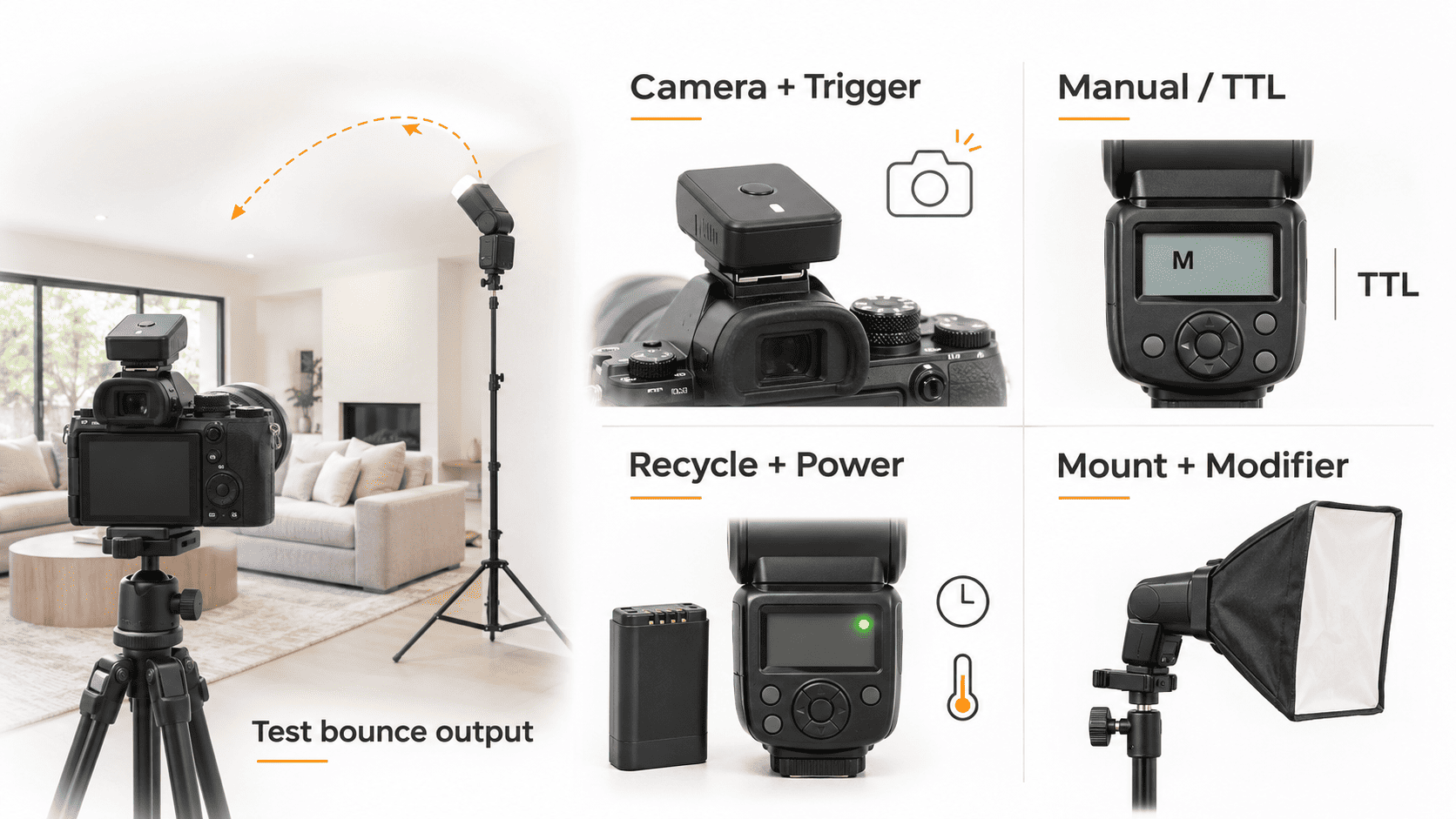
The best purchase is a flash that works with your complete camera and lighting setup. Compare its operating requirements as carefully as its headline specifications.
Flash Output and Bounce Requirements
Do not compare guide numbers without checking the associated ISO and flash head zoom settings. A guide number measured at a narrow zoom setting does not reflect a unit's ability to cover a wide room.
Similarly, watt-second ratings indicate electrical energy input rather than guaranteed exposure across a space. Flash head design, light modifiers, and physical placement ultimately shape the actual illumination on set.
A practical test before purchasing is evaluating performance in real-world conditions: can the unit produce the required exposure at your typical aperture, ISO, and bounce method? Check both the darkest area requiring fill light and the surface closest to the flash to avoid blown-out highlights. Selecting the best flash for real estate photography requires evaluating these real-world output factors rather than relying solely on raw spec sheets.
Camera and Wireless Trigger Compatibility
Always verify exact camera body compatibility, flash model variations, and wireless trigger specifications before making a purchase. Sharing a standard radio frequency does not guarantee cross-compatibility between equipment from different manufacturers.
Double-check the specific feature set you require on location: basic flash triggering, remote manual power control, TTL autoflash, and High-Speed Sync (HSS) each carry distinct compatibility requirements. In addition, consult your camera manual regarding flash restrictions when using electronic shutters or silent shooting modes.
For off-camera lighting setups, confirm connectivity by pressing the camera shutter button. Triggering a flash using the test button on the transmitter unit only confirms part of the wireless signal chain. Choosing the best flash for real estate photography requires ensuring seamless hardware integration across your trigger, camera body, and off-camera speedlight or strobe setup.
Read more: Best Camera for Real Estate Photography in 2026
Manual Control and TTL
Manual control allows you to lock in a fixed flash power output. This approach is ideal for interior shooting when camera position and light placement remain static while you fine-tune the composition.
TTL mode measures light output through the camera lens and automatically adjusts flash power. While helpful in changing ambient light, you should still inspect your test shots and apply flash exposure compensation (FEC) as needed.
Neither mode guarantees flawless exposure in every scenario. For interior setups where consistent frame-to-frame exposure is critical, prioritizing manual control offers greater predictability, making TTL support an optional feature rather than a strict requirement for a real estate photography flash.
Recycle Time, Battery Life and Thermal Limits
Recycle time is the duration required for a flash to recharge and be ready for the next exposure. When comparing published specifications, pay close attention to the power output levels and battery conditions used during testing.
It is also important to distinguish between total battery capacity and continuous firing capability. A flash unit may have ample battery power remaining, yet built-in thermal protection will intentionally throttle operating speed. The product manual for the Godox V860III notes that continuous high-power bursts activate thermal safeguards, which significantly extends recycle times.
Always wait for the flash-ready indicator, adhere to manufacturer cooling guidelines, and keep fully charged backup batteries on hand. If your daily workflow consistently demands full-power bursts at a rapid pace, consider evaluating whether your current portable flash setup is properly matched to that workload.
Weight, Mounting and Modifier Compatibility
Always evaluate the complete equipment setup, including batteries, light stands, mounting brackets, and light modifiers. A compact portable flash can become surprisingly bulky once fully assembled with all its working attachments on set.
Verify that your mounting brackets or stands directly support your specific flash body and allow your intended mounting orientation. Check modifier compatibility independently, as sharing the same brand name does not mean every softbox or reflector fits every light model in a product line.
For real estate assignments, consider the physical maneuverability of moving a fully rigged light setup through standard doorways and shifting positions smoothly across tight interior layouts without disrupting the property environment.
What Else Do You Need in Your Flash Kit?
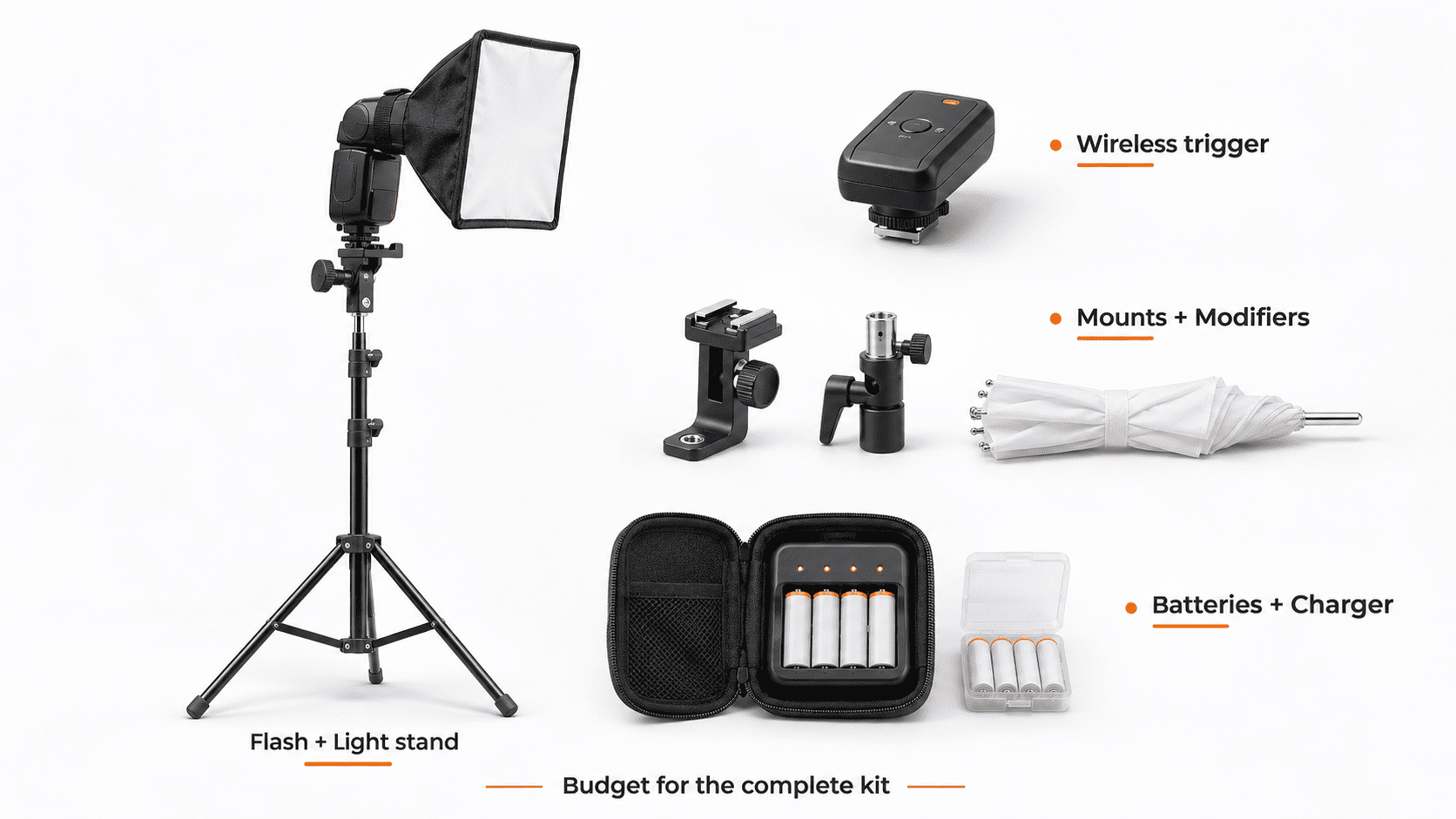
A flash-only price does not represent the cost of a usable lighting kit. Identify what is included in the package and what you must purchase separately.
Wireless Trigger and Light Stand
A compatible wireless radio transmitter allows you to position your flash completely off-camera. Remote power adjustment becomes especially practical when the light unit is placed in hard-to-reach areas or hidden behind interior structures.
Select light stands and mounting brackets rated for the combined weight of your setup, including any attached light modifiers. Ensure the base footprint does not obstruct walkways and follow manufacturer guidelines to secure the equipment safely on set.
Before taking on live client projects, practice moving your assembled lighting kit between different rooms. A setup that feels manageable during initial testing can quickly become cumbersome when navigating fully furnished properties.
Modifiers and Mounting Accessories
Select light modifiers to address specific illumination challenges, such as controlling light spill, changing the apparent size of your light source, or managing light coverage across reflective surfaces.
A small speedlight diffuser attached directly to the flash head does not automatically yield soft, even coverage throughout a large room. The effectiveness of bounce techniques depends heavily on the chosen surface; manufacturers like Nikon recommend utilizing neutral white reflective surfaces to prevent unwanted color casts.
Start with essential modifiers tailored to your core lighting workflow. You can then integrate additional modifiers as specific performance requirements arise in your setup
Spare Batteries and Total Kit Cost
Budget for the trigger, mounting hardware, stand, charger and backup power alongside the flash.
For an AA-powered system, include suitable rechargeable cells and a charger. For a lithium-powered system, check the availability and cost of the correct replacement battery.
Compare complete kits using the same requirements. A lower initial price may be less attractive if it requires several additional purchases, while an expensive unit may provide features you will rarely use.
Frequently Asked Questions
Do You Need Flash for Real Estate Photography?
No. Available-light photography and exposure bracketing are also valid approaches. Flash is useful when you need additional control over light direction, exposure or color. Choose the capture method that suits the property and the required result.
How Much Flash Power Do You Need for Interiors?
There is no universal minimum. Required output depends on camera settings, light placement, bounce distance, reflecting surfaces and ambient light. Test the complete setup under conditions similar to your assignments rather than choosing solely by room area or an advertised power figure.
Is One Flash Enough for Real Estate Photography?
One flash can be enough for some compositions. Other spaces may require repositioning it between exposures or using additional lights. Start with one controllable source and expand when you can identify a specific coverage or workflow limitation.
Do You Need TTL or High-Speed Sync?
Neither is mandatory for every property shoot. Manual flash can work well with a fixed composition. High-speed sync is relevant when you need a shutter speed above the camera’s normal flash-sync limit, but it reduces available flash output. Nikon explains this trade-off in its high-speed sync guide.
Can You Use the Same Flash with Different Camera Brands?
Sometimes, particularly as an off-camera receiver within a compatible radio system. However, direct hot-shoe operation, TTL and high-speed sync can be camera-specific. Confirm the combination of body, transmitter, flash and firmware before relying on it professionally.
Conclusion
The best flash for real estate photography is the one that delivers the required light without making the shoot unnecessarily difficult. The TT600 is an option for manual simplicity, the V860III suits a rechargeable speedlight workflow, and the AD200Pro II provides a dedicated pocket-strobe platform.
Compare the complete kit, check compatibility and test under representative conditions before upgrading. Well-controlled capture also gives the post-production team a clearer starting point. Rotider supports property photographers with photo editing that refines exposure, color and consistency across the final listing gallery.