
The best tripod for real estate photography should hold your composition securely, make leveling manageable and remain practical to move between rooms. Maximum height and advertised load capacity tell only part of that story.
This guide compares three researched options, explains the differences between tripod heads and shows what to check before buying. The recommendations draw on manufacturer specifications and published independent reviews; Rotider has not conducted hands-on testing of these products. We compare kit configuration, working height, carrying weight, folded length, head compatibility and published evidence about handling and stability. These factors guide the recommendations; they are not scores from a standardized Rotider test.
Best Tripods for Real Estate Photography at a Glance
Start by deciding whether you want a complete kit or tripod legs that accept a separately purchased head. Comparing their prices without accounting for that difference can be misleading.
|
Tripod |
Configuration |
Material |
Published weight |
Maximum height |
Height with center column down |
Main consideration |
|
Manfrotto 290 Xtra MK290XTA3-3WUS |
Kit with 804 three-way head |
Aluminum legs |
2.52 kg / 5.56 lb |
171.5 cm / 67.5 in |
147.5 cm / 58.1 in |
Complete kit, but relatively long when folded |
|
Manfrotto MT055XPRO3 |
Legs only |
Aluminum |
2.5 kg / 5.51 lb |
170 cm / 66.9 in |
140 cm / 55.1 in |
Requires a separate head and plate |
|
Benro Mach3 TMA38CL |
Legs only |
Carbon fiber |
2.05 kg / 4.52 lb |
177 cm / 69.7 in |
Not confirmed in the manufacturer information reviewed |
Tall support, but not a compact travel setup |
Specifications are manufacturer-published figures. Legs-only weights and heights exclude the head; the 290 Xtra figures describe the complete kit. Payload ratings should not be interpreted as directly comparable measures of vibration resistance.
The 290 Xtra is worth considering when you want a complete three-way-head kit. The MT055XPRO3 suits photographers who want to choose their own head and can accommodate heavier legs. The TMA38CL provides a taller carbon-fiber option, also requiring a separate head.
These are alternatives for different requirements, rather than a universal first-to-third ranking.
Best Tripods for Real Estate Photography
The options below offer different combinations of height, portability and head configuration. Manufacturer specifications describe the equipment, while published independent reviews provide additional handling context.
Manfrotto 290 Xtra MK290XTA3-3WUS
.png)
The Manfrotto 290 Xtra kit pairs three-section aluminum legs with an 804 three-way head and a quick-release plate.
The three-way head provides separate controls for pan and tilt adjustments, making small framing corrections easier to manage without releasing every axis at once.
The main portability drawback is its 70.7 cm folded length. Check that it fits your bag and vehicle, and consider how far you will carry it between locations.
In its 2015 review of the 290 Dual and Xtra range, ePHOTOzine praised the sturdy construction and noted the weight when carrying the tripods all day. The review provides handling context, but does not establish how the current kit compares with newer alternatives.
-
Consider this if: You prefer a ready-to-use bundle with independent three-axis adjustments.
-
Verify before buying: The specific package code, included head model, stowed dimensions, and updated total pricing.
Manfrotto MT055XPRO3
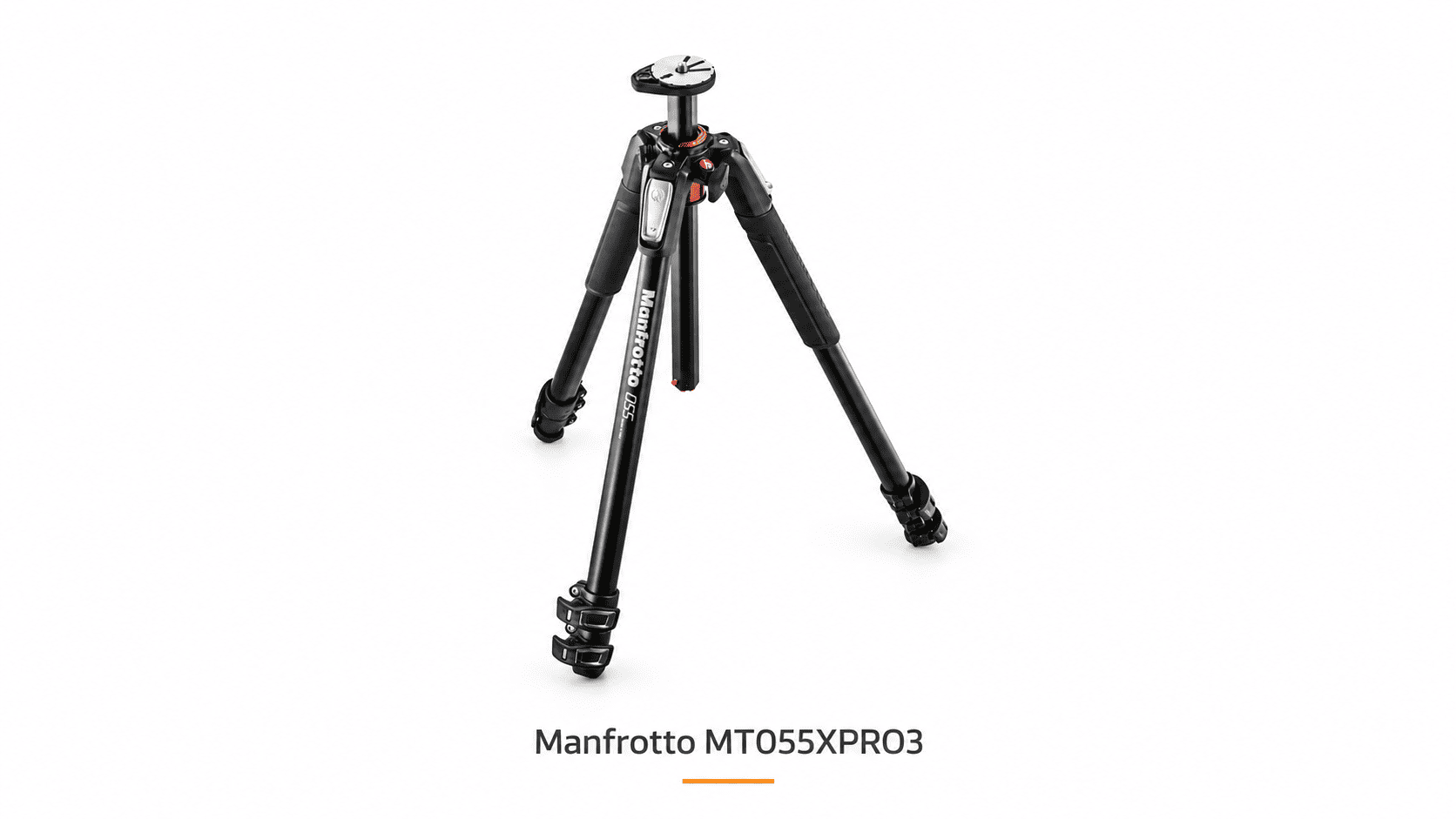
The Manfrotto MT055XPRO3 is a set of aluminum legs with a center column that can be positioned horizontally. The legs can be paired with a compatible ball, three-way or geared head.
Choosing legs separately can be useful when you have a particular head in mind. Include the head, quick-release plate and carrying accessories when comparing total weight and cost.
The horizontal center column allows the camera to extend away from the tripod's central axis, changing the balance of the setup. Use it when the composition requires it, and check stability before shooting.
The Center Column reported good stiffness for the price, alongside substantial weight, bulk and low vibration damping. Its findings illustrate why a high payload rating alone does not establish how quickly vibrations will settle.
-
Consider this if: You require rugged aluminum legs and want the flexibility to build a custom head setup.
-
Verify before buying: Total combined weight, head mounting compatibility, and real-world stability with your camera setup.
Benro Mach3 TMA38CL
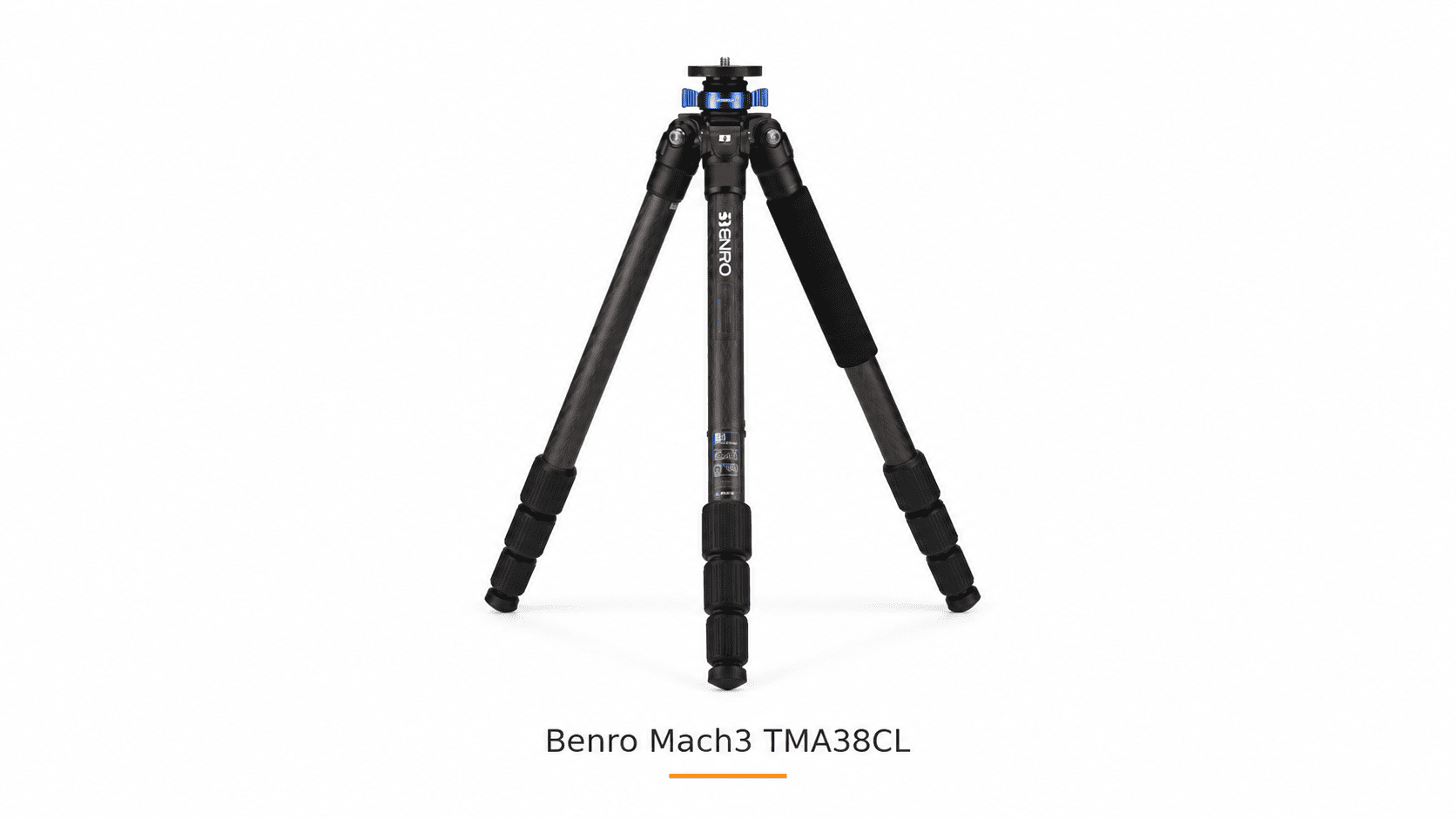
The Benro Mach3 TMA38CL has four-section carbon fiber legs and twist locks. It includes a carrying case but requires a separate head.
Its published maximum height of 177 cm may be useful when you need higher camera positions. With a folded length of 59 cm and legs weighing 2.05 kg, it is not an ultra-compact travel option.
Fstoppers published a hands-on review of the TMA38CL in 2017. This older review can provide handling context, but should not be treated as a current comparison of every available alternative.
Consider this if: You need taller carbon-fiber legs and plan to choose a separate head. Verify before buying: Complete-system weight, folded size with the head attached, and working height with the center column lowered.
How to Choose the Best Tripod for Real Estate Photography
Choose around the camera positions and adjustments you use regularly. A tripod that looks suitable on a specification sheet may still be inconvenient during a full property shoot.
Stability and Head Locking
Treat the legs and head as an integrated system. Framing can drift if the camera plate is loose or the head moves slightly after locking.
Mount your camera and lens, compose the shot and lock the head. Watch a fixed reference point near the frame edge for any visible framing drift.
Gradual drift and brief settling vibrations are different problems. Check mounting security, head locking and the shooting conditions before deciding whether equipment needs replacing. Published load capacity alone cannot diagnose either issue.
Working Height and Center Column Extension
Check the tripod's maximum height with the center column lowered, then account for the height added by the head and camera. Advertised maximum height often includes a fully extended center column.
There is no universal camera height suitable for every property shot. The viewpoint should always serve the framing, and the tripod must offer enough adjustment flexibility to reach that perspective comfortably.
If routine compositions require full center-column extension, consider taller legs. Extra height may help you reach the required viewpoint while keeping the column lower.
Weight, Folded Length and Setup Speed
Consider how your support equipment moves with you across a full production day. A heavier model may be manageable when you drive directly up to every site, but navigating long walks and multiple staircases makes physical weight a much greater factor.
Folded length affects bag and vehicle storage. Leg sections, lock designs and angle selectors also affect setup speed, along with your familiarity with the equipment.
Practice extending, leveling and folding the tripod several times. Choose controls you can operate smoothly and securely.
Complete Kit vs. Legs-Only Cost
Compare complete purchasing totals:
Tripod legs + head + camera plate + any required adapter or carrying accessories
A lower legs-only price may exceed the cost of a complete kit once the missing components are included. Conversely, buying legs separately may avoid paying for a bundled head you intend to replace.
Read more: Best Camera for Real Estate Photography in 2026
Which Tripod Head Works Best for Property Photography?
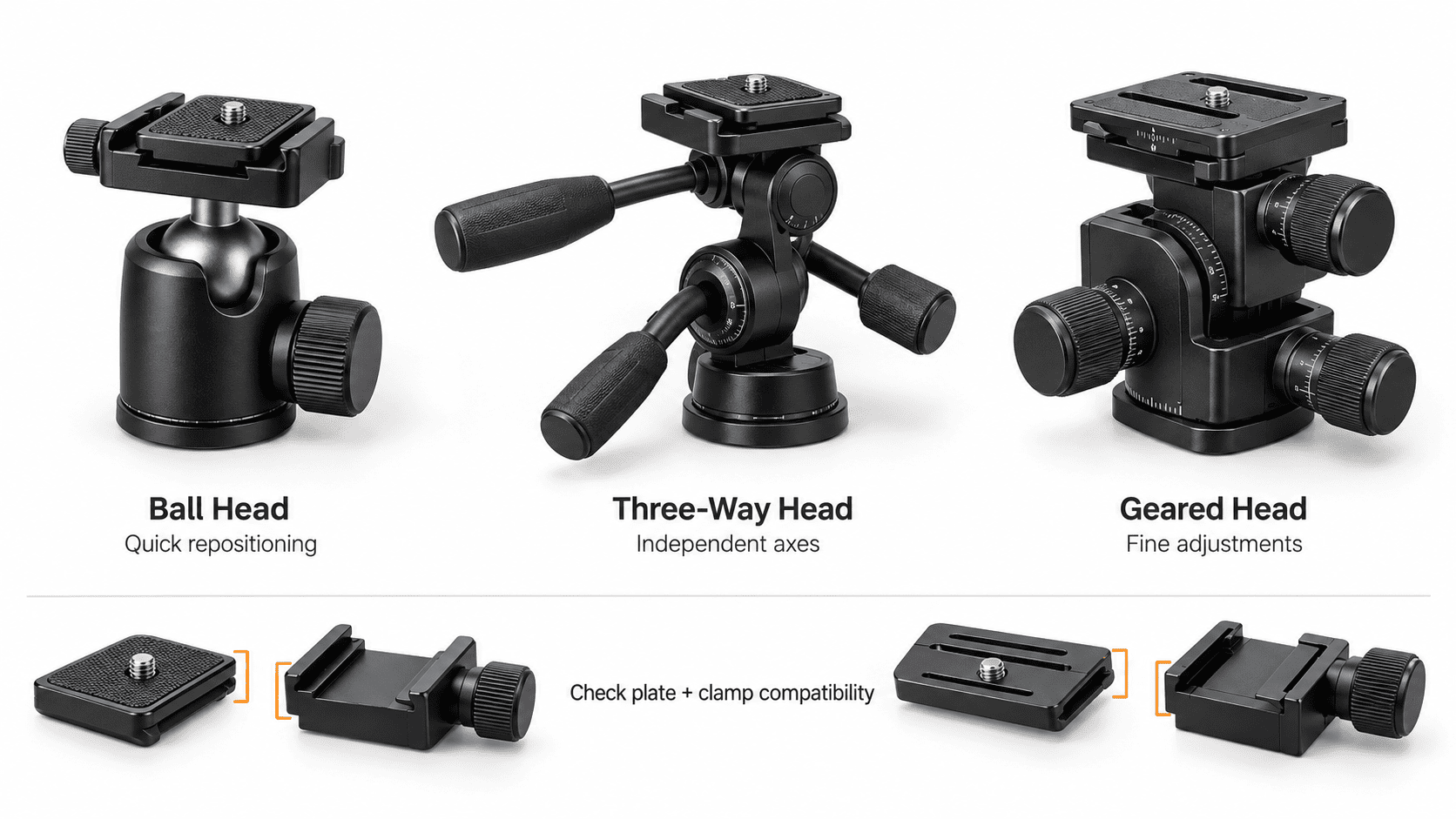
Head choice affects both adjustment speed and precision. No design automatically keeps the camera level; the photographer still needs to establish and check the composition.
Ball Heads for Quick Repositioning
A ball head allows broad movement through a compact mechanism. It can suit photographers who value quick repositioning and are comfortable making small adjustments by hand.
The limitation is that releasing the main control can allow movement in several directions. Test whether you can correct one part of the composition without disturbing another.
Check lock-up behavior with your camera attached rather than judging only the size of the ball or the published capacity.
Three-Way Heads for Independent Adjustments
A three-way pan-tilt head provides separate axis controls. You can adjust one direction while keeping the other axes locked.
These heads may take up more space than compact ball heads, particularly when handles protrude. They require manual positioning; geared heads use adjustment knobs for finer movements.
A three-way head is worth considering when you want separate axis controls. Compare the weight and price of specific models with ball and geared alternatives.
Geared Heads for Fine Leveling
Geared heads use adjustment knobs for smaller, controlled movements. They can be useful when fine pitch and roll corrections are a recurring part of the work.
The Manfrotto 405, for example, is a geared head—not a complete tripod. Its published weight is 1.6 kg, which demonstrates why the head must be included in transport and system calculations.
A geared head can improve control, but it is not mandatory for every listing photographer. Compare the precision benefit against weight, cost and your preferred pace.
Quick-Release Plates and Compatibility
Carefully inspect the quick-release plate and clamp interface. Just because a mounting screw fits your camera base does not mean that specific plate will seat properly into a different tripod head.
For instance, Manfrotto designates the proprietary 410PL plate for its 405 head. Avoid assuming this support head will accept Arca-standard plates without a dedicated conversion adapter.
If you rely on L-brackets or regularly swap between multiple support rigs, double-check cross-platform compatibility across your entire setup prior to buying.
Aluminum or Carbon Fiber for Real Estate Photography?
Material composition is only one factor in your decision-making process. Leg section diameters, joint locks, center column engineering, and the tripod head itself all shape real-world performance.
While carbon fiber offers a distinct weight advantage, a heavy-duty carbon tripod can still weigh more than a compact aluminum alternative. Compare full operational builds rather than assuming every carbon fiber model is lighter or more portable.
Aluminum can be a practical option when budget matters and carrying distances are short. Carbon fiber may be worth the additional cost when the complete setup offers a meaningful weight saving for your daily work.
Choose the head and legs together so that mounting compatibility, adjustment control and carrying weight suit your camera setup.
How to Check Your Tripod Before a Property Shoot
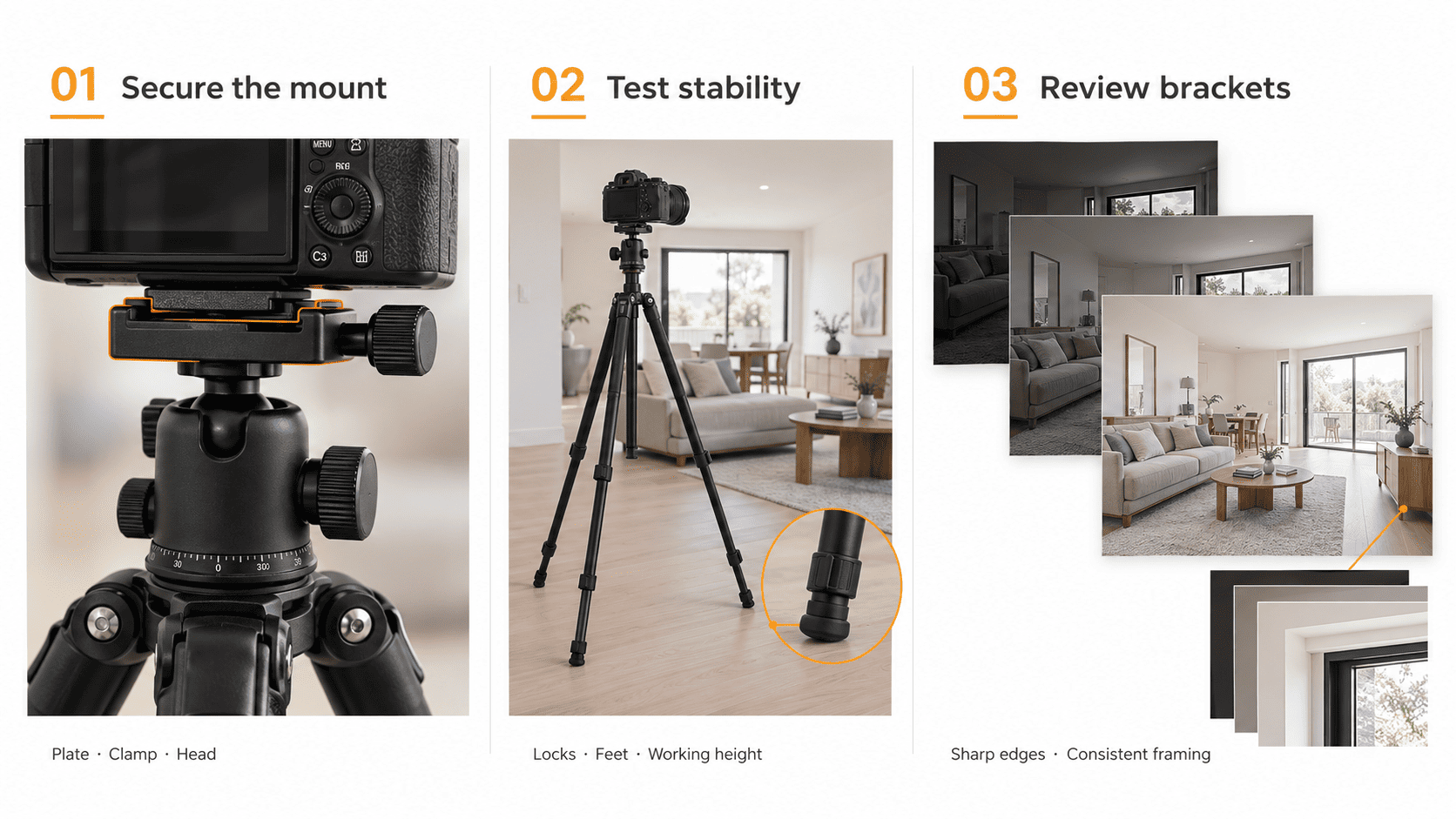
Run a short check using the same camera, lens and mounting accessories you intend to take to the assignment.
Check Mounting Security and Composition Drift
Confirm that the head is securely attached to the legs and the plate is tight on the camera. Seat the plate fully in the clamp and check any safety mechanism.
After locking the composition, watch for movement. Address slipping or gradual drift before photographing the property.
Test Stability at Your Working Height
Set up at a representative height with the column positioned as you normally use it. Confirm that the leg locks hold and the feet sit securely.
Allow vibration from adjustments to settle before capture. Avoid touching the tripod during an exposure, and be alert to movement transmitted through the floor.
Review an Exposure-Bracketed Sequence
Capture a bracket using representative settings and inspect the files at sufficient magnification. Check fine edges for blur and look for framing changes between exposures.
Moving foliage or curtains can still vary between frames even when the camera is stable. Tripod support improves capture consistency, but it cannot remove movement within the scene.
Read more: Real Estate Post-Production — A Complete Guide for Photographers and Media Teams
Frequently Asked Questions
What Is the Best Budget Tripod for Real Estate Photography?
Choose the least expensive complete setup that securely supports your equipment and provides the required adjustments. Among the options discussed here, consider the 290 Xtra when you want a kit with a three-way head, but compare current complete-system prices before deciding.
How Tall Should a Real Estate Photography Tripod Be?
It should reach your required viewpoints, preferably without relying on full center-column extension for routine compositions. Include the head and camera when calculating usable height.
Do You Need a Geared Head?
No. A ball or three-way head can work well. A geared head is worth considering when fine leveling adjustments regularly slow you down or disturb the composition.
Can You Use a Travel Tripod for Property Photography?
Yes, provided it remains stable with your equipment at the required height. Check head control, leg rigidity and column extension rather than choosing solely for compact folded size.
Can the Same Tripod Be Used for Photos and Video?
Sometimes. Static video can use a still-photography setup, while controlled pans and tilts may benefit from a suitable fluid head. Confirm mounting compatibility and the requirements of both workflows.
Should You Turn Off Image Stabilization on a Tripod?
Follow the instructions for your specific camera and lens. Tripod behavior varies between stabilization systems, so a universal on-or-off recommendation is not appropriate.
Conclusion
The best tripod for real estate photography is a complete support system that suits your camera, working height and adjustment preferences. Compare legs, head, plate, carrying size and total cost together.
Stable, consistent capture also gives editors better source material to work with. Rotider supports photographers and media teams with real estate photo and video editing, helping turn well-prepared files into consistent marketing assets.




.jpg)
-1.png)