 (1).png)
The best Sony FE lens for real estate photography depends on the coverage you need, whether you also shoot video and how much you want to invest. A versatile wide-angle zoom is a practical starting point, but the widest or most expensive option is not automatically the right choice.
This guide compares five Sony-branded E-mount wide-angle lenses designed for full-frame real estate photography. Third-party alternatives are discussed separately.
The shortlist covers five needs: a lightweight stills-and-video kit, a faster-aperture zoom, wider coverage, a compact f/2.8 option and an older model worth comparing used. Recommendations are based on manufacturer specifications and workflow fit, rather than hands-on comparative testing.
Best Sony FE Lenses at a Glance
For a first shortlist, consider the FE PZ 16–35mm F4 G for a lightweight photo-and-video setup, the FE 16–35mm F2.8 GM II when a faster aperture matters, and the FE 12–24mm F4 G when you regularly need wider coverage.
|
Lens |
Focal range |
Maximum aperture |
Weight |
Suggested fit |
Main trade-off |
|
Sony FE PZ 16–35mm F4 G |
16–35mm |
Constant f/4 |
353 g |
Lightweight stills-and-video kit |
No f/2.8 option for lower-light video |
|
Sony FE 16–35mm F2.8 GM II |
16–35mm |
Constant f/2.8 |
547 g |
Faster aperture with a 16–35mm range |
Higher investment |
|
Sony FE 12–24mm F4 G |
12–24mm |
Constant f/4 |
565 g |
Wider coverage from restricted positions |
No conventional screw-in front filter |
|
Sony FE 16–25mm F2.8 G |
16–25mm |
Constant f/2.8 |
409 g |
Compact f/2.8 kit with a shorter zoom range |
Stops at 25mm |
|
Sony Vario-Tessar T* FE 16–35mm F4 ZA OSS |
16–35mm |
Constant f/4 |
518 g |
Used option to assess by price and condition |
Value depends on price and condition |
Weights are manufacturer specifications. Sony publishes the specifications for the PZ 16–35mm, GM II, 12–24mm, 16–25mm and Zeiss 16–35mm.
Best Sony FE Lenses for Real Estate Photography
Start with the lens that covers your recurring assignments. A secondary lens should solve a specific limitation, such as insufficient width or a need for tighter compositions.
Sony FE PZ 16–35mm F4 G
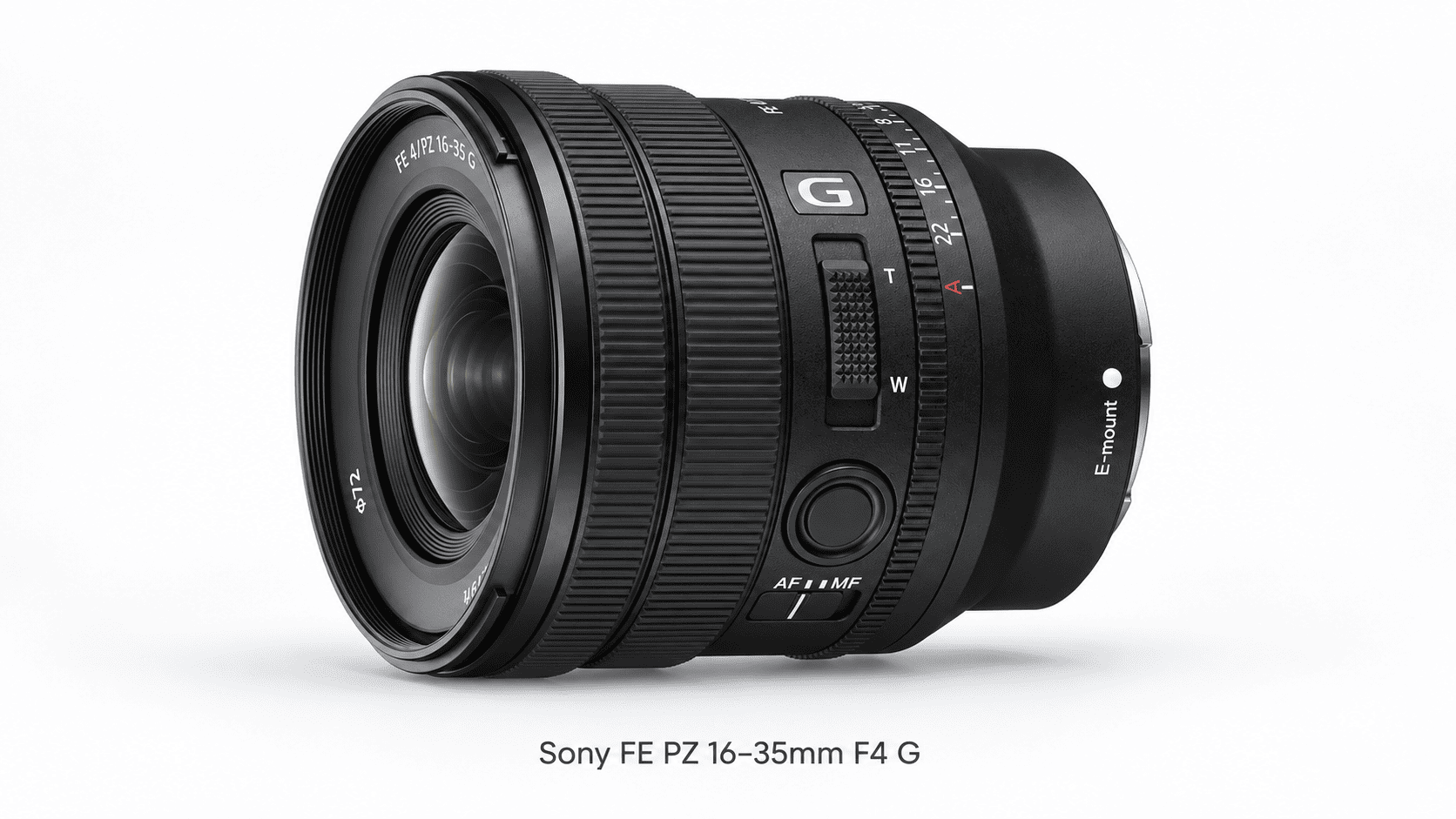
The Sony FE PZ 16–35mm F4 G is a practical starting point for photographers building a lightweight property kit. Its 16–35mm range supports wider room views and more selective compositions without changing lenses.
Power zoom enables smooth focal changes during video capture. For still photography, its key advantage is versatility paired with a lightweight build (353 g, with a 72 mm filter thread).
The constant f/4 aperture works well for tripod-mounted shots, though it is less flexible than f/2.8 in low light when shutter speed and ISO are constrained.
Consider this lens for a compact stills-and-video kit, and test its widest setting in your usual recording mode.
Sony FE 16–35mm F2.8 GM II
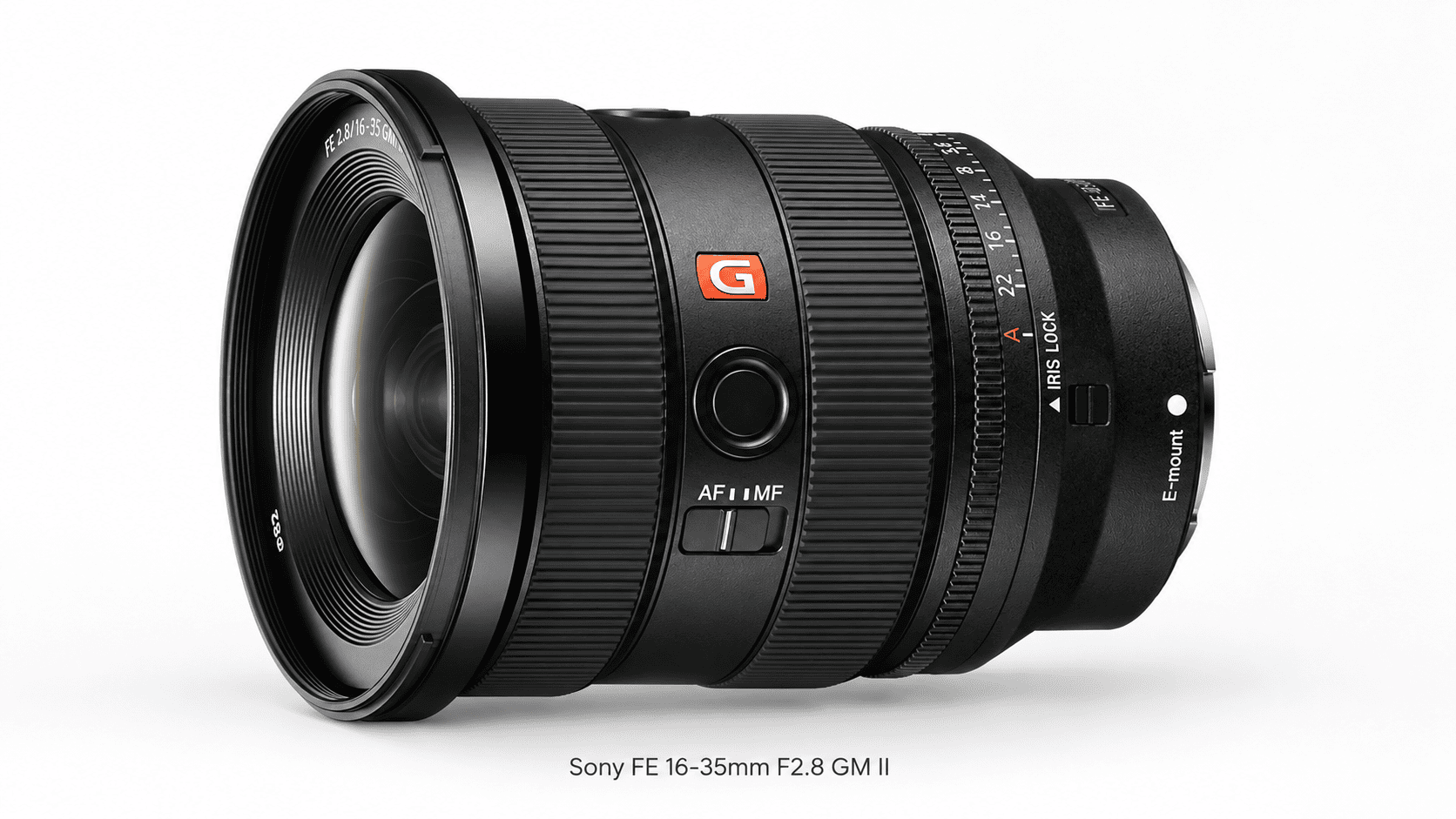
The Sony FE 16–35mm F2.8 GM II combines the same focal range with a constant f/2.8 maximum aperture. It accepts 82 mm front filters and weighs 547 g.
The wider f/2.8 aperture can help with low-light video when shutter speed is constrained, or with agent-led shots where a shallower depth of field is intentional.
For interior photographs taken at f/8, the f/2.8 maximum aperture alone does not provide an exposure advantage over an f/4 lens. Image quality depends on overall optical design across focal lengths, not just maximum aperture.
Choose the GM II if its added versatility supports your specific services. If your workflow relies mostly on tripod-mounted stills, compare it against an f/4 alternative to evaluate cost efficiency.
Sony FE 12–24mm F4 G
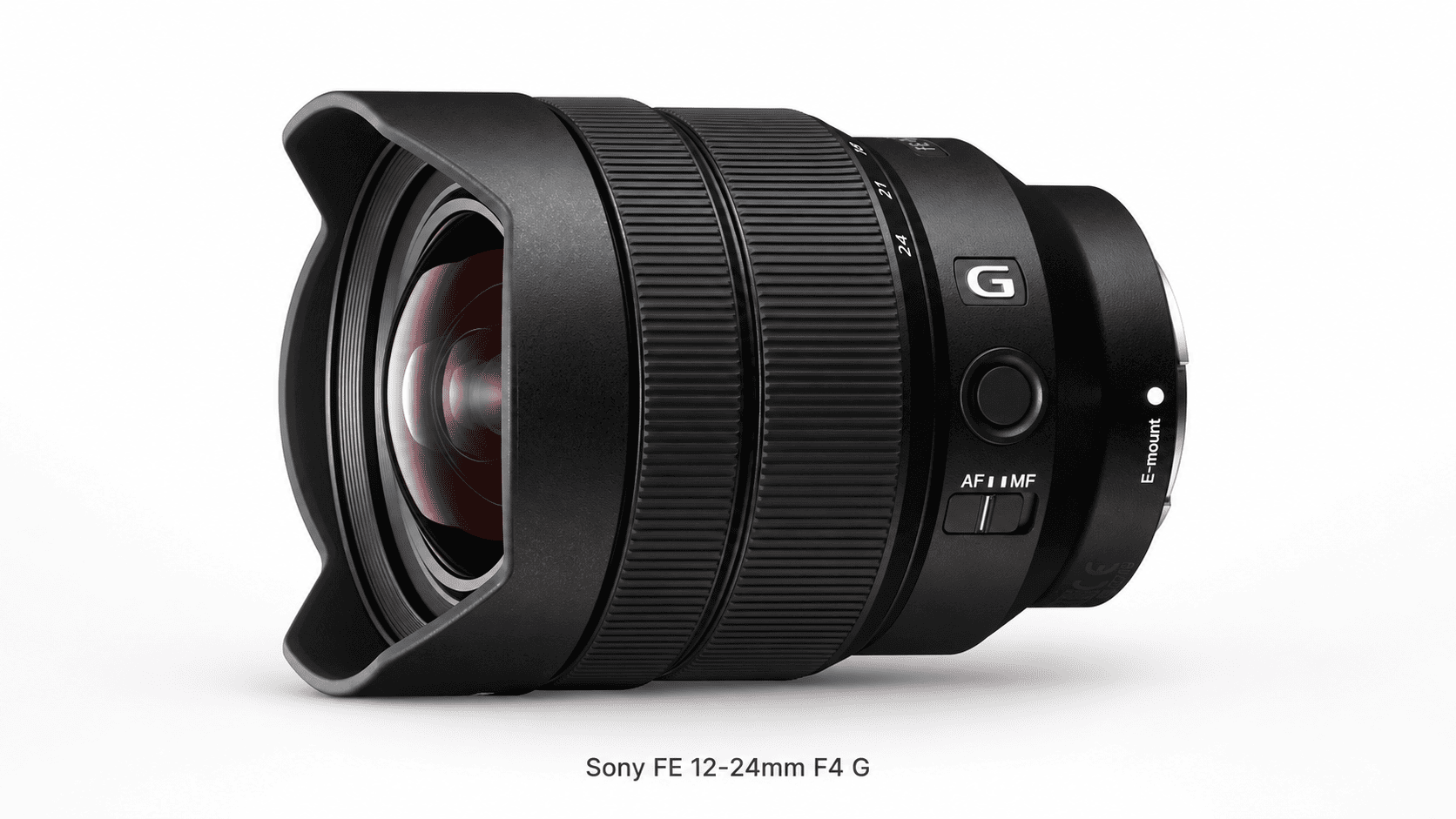
The Sony FE 12–24mm F4 G provides coverage beyond a 16mm starting point. This can help when camera placement is restricted or a composition requires a wider view.
The lens covers 12–24mm, has a constant f/4 maximum aperture and weighs 565 g. It does not accept conventional screw-in front filters. If you use filters, check for a compatible dedicated holder system.
Having 12mm available does not mean every room calls for it. Ultra-wide framing can overemphasize foreground furniture and cause pronounced edge stretching.
Use 12mm when the composition needs the additional coverage. You may also need a longer lens for tighter exterior views and detail shots.
Sony FE 16–25mm F2.8 G
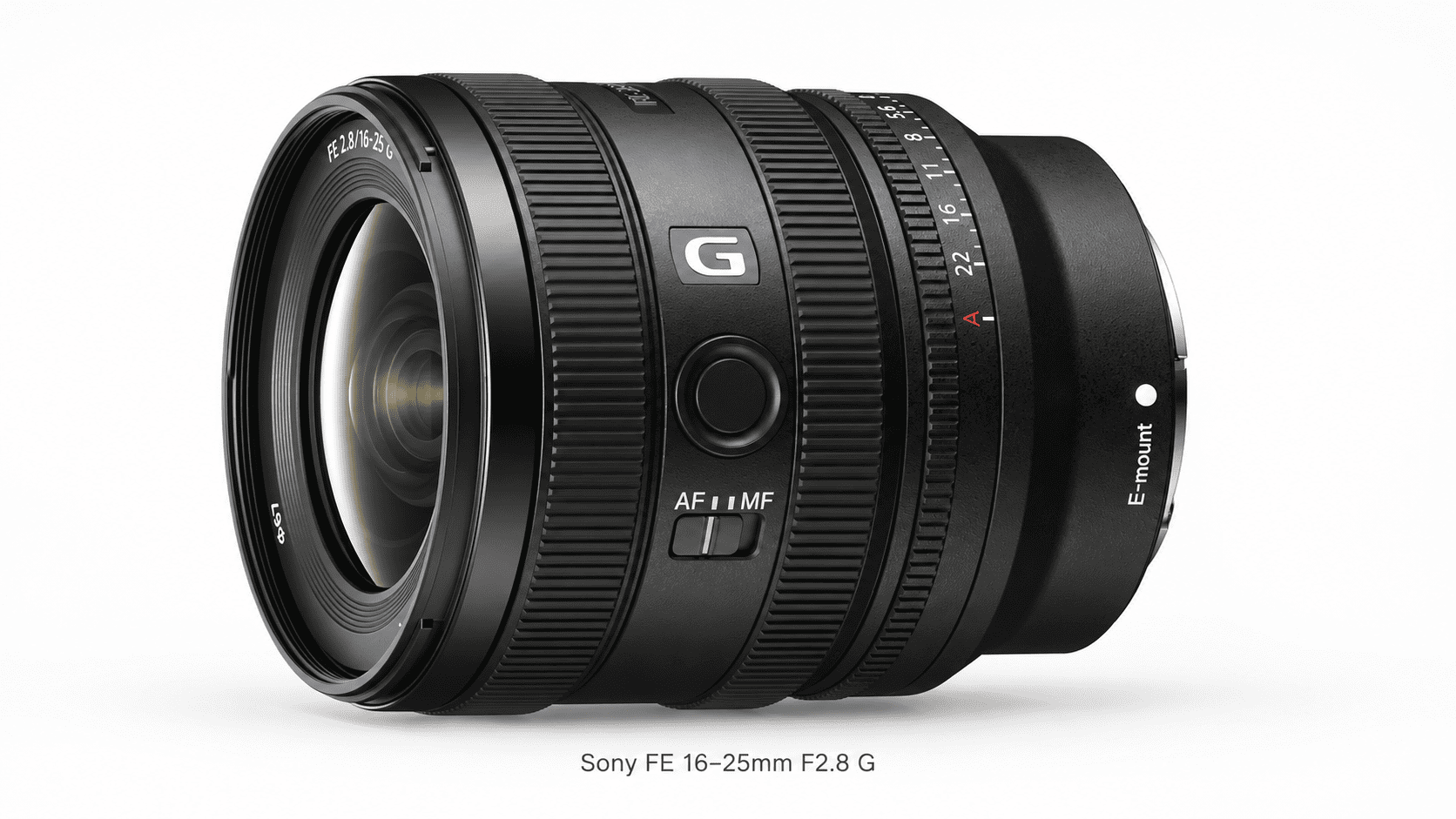
The Sony FE 16–25mm F2.8 G offers a compact alternative for photographers who want f/2.8 without the full 16–35mm range. Sony lists a weight of 409 g and a 67 mm filter thread.
The main limitation of this lens is its 25mm ceiling. This trade-off is manageable if your workflow favors wide compositions and you already carry a longer lens.
Review focal length data from past assignments before deciding. If you regularly need 28–35mm compositions, the shorter range may lead to more lens changes. Otherwise, its compact build fits streamlined setups well.
It serves as a strong choice for a lightweight hybrid kit, particularly when the fast aperture meets specific video requirements.
Sony Vario-Tessar T* FE 16–35mm F4 ZA OSS
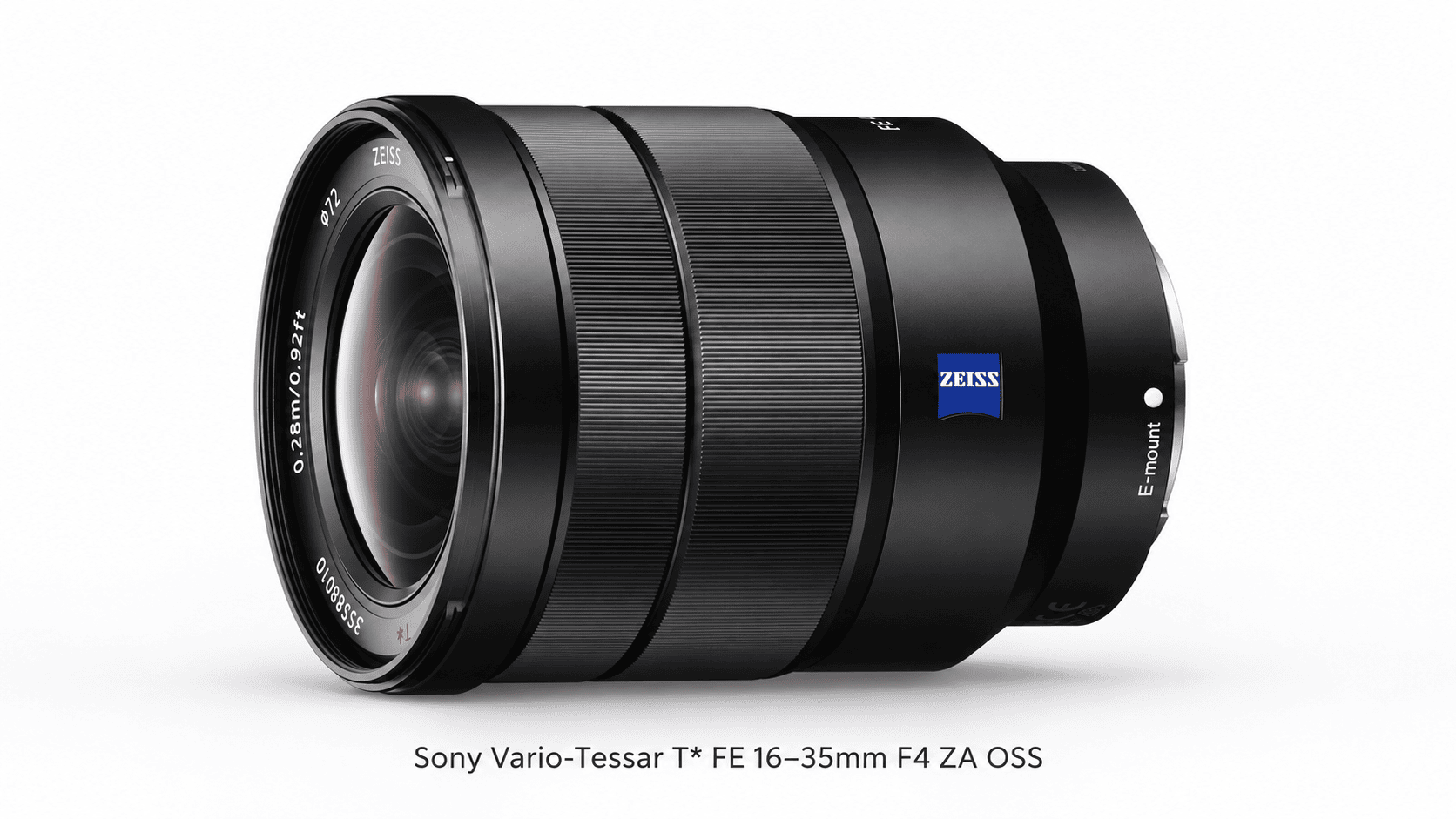
The Sony Vario-Tessar T* FE 16–35mm F4 ZA OSS is a different lens from the newer PZ model. It offers a 16–35mm range, constant f/4 aperture and Optical SteadyShot. Sony lists its weight at 518 g.
Buying used may lower the purchase cost, depending on condition, warranty coverage and current new-lens pricing. An older design may still meet professional delivery requirements if its condition and performance suit the assignment.
Check the lens’s condition, autofocus performance, zoom operation and edge-to-edge sharpness. Compare the overall offer, including warranty coverage and return policies, with the alternatives.
If you already own this lens, identify a clear operational bottleneck before upgrading. Moving to new gear is justified when it resolves issues with optical performance, weight, or video limitations, rather than age alone.
Read more: Best Lenses for Real Estate Photography in 2026
Which Sony FE Focal Range Should You Choose?
Choose coverage according to your available camera positions and the purpose of each photograph. Room size matters, but so do foreground objects, furniture placement and the relationships you need to show.
16–35mm for a Versatile Primary Lens
A 16–35mm zoom provides great flexibility for framing interiors. Wider focal lengths highlight room connections, while longer focal lengths allow tighter framing.
This range is especially useful from a fixed tripod setup, letting you fine-tune framing without shifting position or disturbing foreground furniture.
However, check whether 16mm captures the views you need. If you consistently struggle to capture full-room perspectives, a wider lens may be necessary.
12–24mm for Wider Coverage
A 12–24mm range is valuable when expanding the field of view serves a clear compositional purpose. It can help when shooting positions are restricted and provide extra framing space for perspective correction.
Avoid defaulting to the widest setting. A strong image highlights functional spatial design rather than maximizing visible floor, ceiling, and wall areas.
Compare wide and tight options from the same standing position. Choose the frame that communicates the layout most effectively, maintaining balanced proportions with minimal edge distractions.
When a Prime or Longer Lens Makes Sense
Wide-angle prime lenses suit photographers who prefer a fixed focal length and adjust their shooting position to compose. However, they offer less flexibility in tight spaces bounded by walls or furniture.
A longer lens serves as a valuable secondary optic alongside a primary zoom, ideal for capturing exteriors, architectural details, or interior finishes. Its utility depends on specific deliverable requirements from clients.
Prioritize building your kit around a dependable primary lens first. Additional optics should meaningfully expand your coverage rather than duplicate existing focal lengths without a clear purpose.
Read more: Best Focal Length for Real Estate Photography
Do You Need an F2.8 Lens for Real Estate Photography?
No. A faster maximum aperture is useful in some situations, but it is not a requirement for professional listing photographs.
Tripod-Mounted Listing Photography
For static scenes on a stable tripod, you can often lengthen the exposure while keeping the aperture needed for depth of field.
With both lenses set to f/8, the same shutter speed and ISO produce similar nominal exposure, although actual light transmission can differ. Optical performance varies by specific model rather than maximum aperture alone.
For still photography, prioritize effective focal coverage, reliable focus, and edge-to-edge sharpness in your final output. A fast aperture cannot compensate for poor camera placement or inaccurate exposure settings.
Property Video and Other Paid Assignments
Video capture introduces distinct constraints. Shutter speed is generally dictated by frame rates and desired motion blur, limiting exposure flexibility.
Opening from f/4 to f/2.8 provides approximately one stop more light, allowing a lower ISO at the same shutter speed if the shallower depth of field is acceptable.
This advantage extends to handheld shooting and tracking moving subjects, where exposure times are constrained. Evaluate your full range of services before deciding if a faster maximum aperture justifies the added investment.
What to Check Before Buying a Sony FE Lens
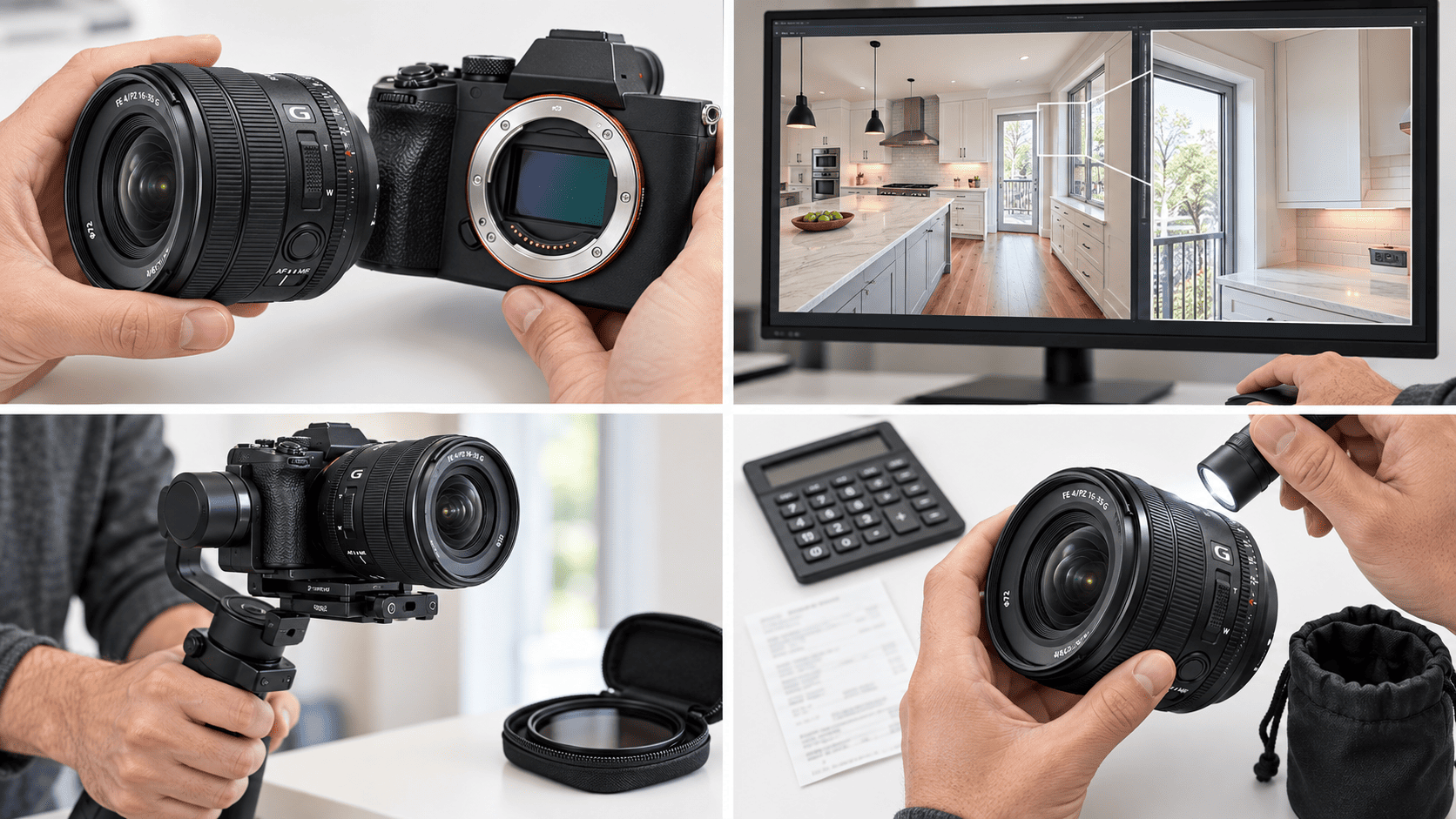
When choosing a Sony full-frame lens for real estate photography, consider both camera compatibility and your production workflow. Review the final output, not just the specification sheet.
Full-Frame Coverage and Camera Crop Modes
The "FE" designation identifies Sony E-mount optics engineered for full-frame sensors. APS-C lenses in the E-mount lineup should not be treated as equivalent options for full-frame bodies, a distinction clearly outlined in Sony's compatibility guidance.
An APS-C E-mount lens may mount on a full-frame Sony body, but APS-C crop mode uses a smaller sensor area and reduces the recorded pixel count for still photographs.
Review your intended video recording modes carefully. Some recording modes and electronic stabilization settings crop the image, reducing the recorded field of view.
Test your specific combination of camera body, lens, and video settings in practice. A lens that provides enough coverage for stills may feel restrictive when video crop modes are active.
Corner Detail and Lens Corrections
Evaluate representative RAW files at the focal lengths and apertures you use. Look at doorframes, cabinetry, textures and objects near the edges.
Adobe’s lens-correction documentation explains profile-based distortion and vignetting correction. These adjustments are part of the finished-image assessment, so compare corrected exports rather than relying only on unprocessed previews.
Perspective adjustments can also alter the usable framing. Leave appropriate margins around important features and inspect the final crop before deciding whether the lens provides enough coverage.
For a rental test, photograph the same interior at the focal lengths you normally use. Apply your usual lens profile and perspective corrections, export at the delivery size, and compare corner detail and retained framing.
Read more: Step-by-Step Tutorial for Editing Real Estate Photos in Lightroom
Filters, Weight and Video Handling
Check filter thread compatibility and holder requirements. Factor in adapter rings and replacement filter costs when calculating total gear investment.
For video work, test autofocus, zoom operation, and payload balance on your rig. Power zoom enables smooth focal changes, though it is not strictly necessary for every walkthrough shot.
Evaluate total system weight, including camera body, stabilization gear, and accessories, rather than comparing individual lens specs in isolation.
New and Used Purchase Costs
Compare current pricing between authorized dealers and reputable used stores. Promotional discounts can shift the value proposition.
For used gear, inspect glass condition, mount wear, focus performance, and edge-to-edge sharpness. A return window provides a valuable opportunity to test your complete real estate workflow.
Factor in filters, repair risks, and warranty coverage when calculating total costs. Minor savings lose their appeal if purchase protection is limited.
Are Third-Party Sony E-Mount Lenses Worth Considering?
Yes. Third-party full-frame E-mount lenses can offer useful combinations of coverage, aperture and price. They belong in the comparison when they meet your requirements, even though they are not Sony-branded FE products.
Two options to investigate are the Tamron 16–30mm F/2.8 Di III VXD G2 and Sigma 16–28mm F2.8 DG DN Contemporary. Both manufacturers identify versions for Sony E-mount full-frame cameras.
Compare the tradeoffs directly. A shorter zoom range may be acceptable if the lens covers your usual compositions; a lower price is less useful if it creates frequent lens changes or compatibility limitations.
Check firmware support, autofocus behavior and any camera features you depend on. Do not assume either native or third-party branding alone establishes the better result.
Frequently Asked Questions
Is 16mm Wide Enough for Real Estate Photography?
On full frame, 16mm provides useful coverage for many interior compositions. It will not suit every camera position or property. Judge whether it captures the required information after corrections and cropping rather than assuming all small spaces require a wider lens.
Is the Sony 12–24mm Better Than the 16–35mm?
Neither range is universally better. The 12–24mm offers more width, while the 16–35mm extends farther into tighter compositions. Choose according to the views you need most often and whether you want to carry a second lens.
Can You Use Sony FE Lenses on APS-C Cameras?
Compatible Sony FE lenses can be used on Sony APS-C E-mount bodies. However, the narrower angle of view changes their practical role. A 16–35mm lens provides coverage comparable to approximately 24–52.5mm on full frame, so it does not replace a dedicated APS-C ultra-wide zoom. Sony confirms FE compatibility in its APS-C lens guidance.
Do You Need OSS for Tripod Photography?
OSS is not a requirement for a stable tripod setup. Follow the instructions for your exact camera and lens combination: Sony recommends disabling SteadyShot for tripod use in several camera help guides, including the α7 II guide.
Is a 24–70mm Lens Enough for Property Photography?
It can handle selected interiors, exteriors and details, but 24mm may be restrictive when camera placement is limited. Review the compositions your clients require before relying on it as your only property lens.
Conclusion
The best Sony FE lens for real estate photography is the one that provides useful coverage and dependable results within your budget. The FE PZ 16–35mm F4 G is a practical starting point for a lightweight hybrid kit. The GM II adds aperture flexibility, the 12–24mm expands coverage, and the 16–25mm offers a compact f/2.8 alternative.
Test the strongest candidate on a complete property before purchasing. Review corrected detail, final framing and handling alongside the time needed to produce the gallery.
Lens selection supports the capture stage; consistent exposure, color and final review complete the result. Rotider helps photographers prepare listing-ready galleries through real estate photo editing and HDR processing, supporting a repeatable workflow after the shoot.



.png)