.jpg)
The best Nikon Z lens for real estate photography depends on the spaces you photograph, your camera’s sensor format and whether you also produce video. For full-frame listing photography, the NIKKOR Z 14-30mm f/4 S is our recommended starting point. The 14–24mm f/2.8 S suits photographers who need a wider maximum aperture, while the 17-28mm f/2.8 offers a lighter alternative with less coverage at the wide end.
This guide compares Nikon Z wide-angle lenses for real estate photography, explains the options for DX cameras and highlights what to check before buying.
Best Nikon Z Lenses at a Glance
Start with your camera format. The three full-frame zooms below serve different priorities, while the DX 12–28mm is designed for Nikon’s smaller-sensor Z cameras.
|
Lens |
Format |
Recommended role |
Approximate weight |
Filter arrangement |
Main trade-off |
|
NIKKOR Z 14–30mm f/4 S |
FX/full frame |
Everyday interior and exterior photography |
485 g |
82 mm front filters |
Maximum aperture is f/4 |
|
NIKKOR Z 14–24mm f/2.8 S |
FX/full frame |
Photographers needing 14mm coverage and f/2.8 |
650 g |
112 mm front filters with the HB-97 hood; rear gel-filter holder |
Larger filter setup and less reach than 14–30mm |
|
NIKKOR Z 17–28mm f/2.8 |
FX/full frame |
Compact photo-and-video kit |
450 g |
67 mm front filters |
Starts at 17mm rather than 14mm |
|
NIKKOR Z DX 12–28mm f/3.5–5.6 PZ VR |
DX/APS-C |
Compact DX interiors and video |
205 g |
67 mm front filters |
Widest view is approximately 18mm equivalent; may be restrictive for some interiors |
Specifications come from Nikon’s product documentation. The recommended roles are editorial judgments about those specifications, rather than laboratory rankings. These are selected native NIKKOR options, not an exhaustive list of every Z-mount lens.
Best Nikon Z Lenses for Real Estate Photography
The strongest choice is the lens whose compromises fit your assignments. Interior coverage, maximum aperture, filter compatibility and handling matter more than selecting the most expensive model.
NIKKOR Z 14-30mm f/4 S
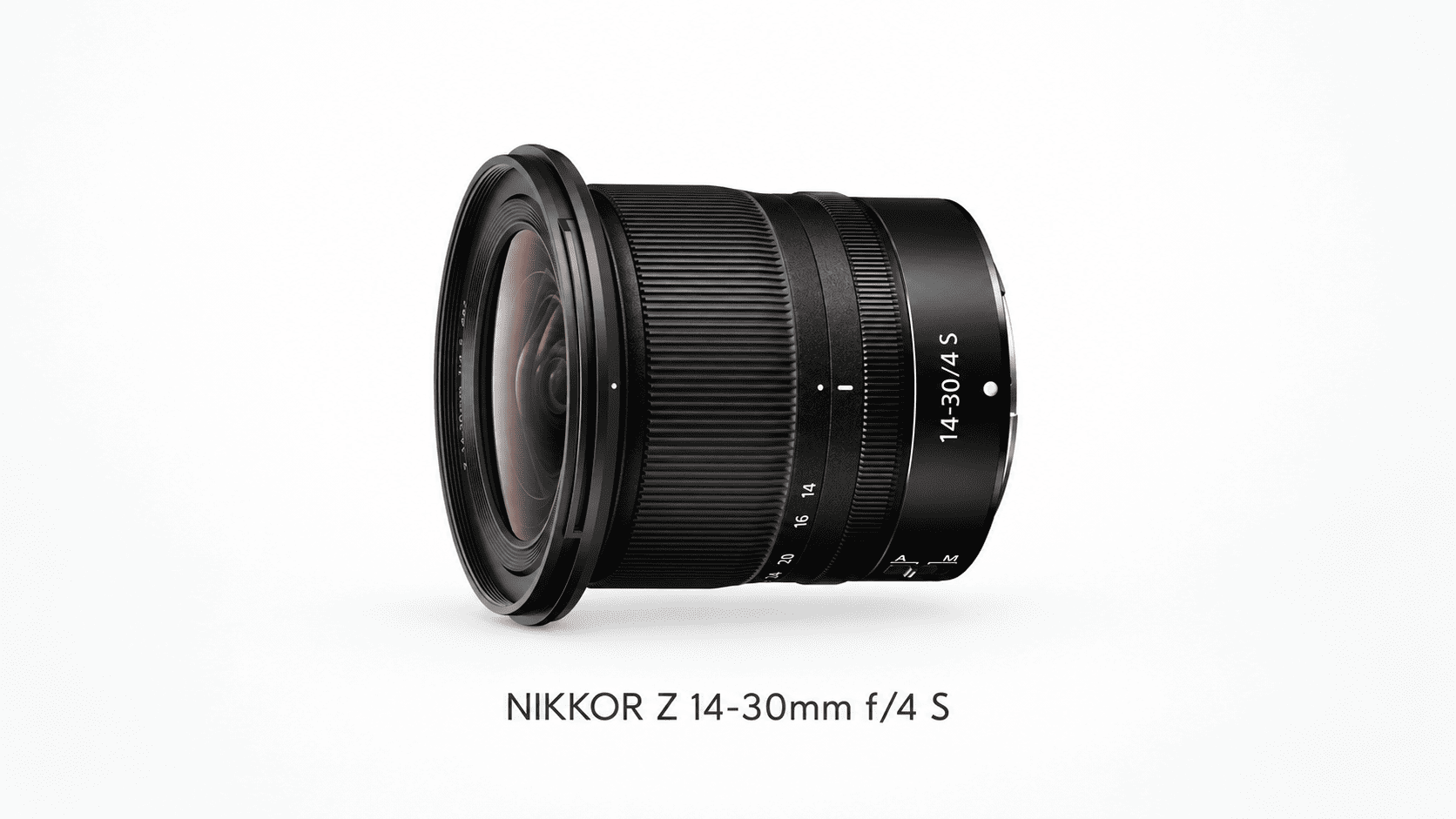
For full-frame listing stills, the 14-30mm is our starting recommendation because it combines 14mm coverage, a longer endpoint than the other two zooms and an 82 mm filter thread. This is a workflow-based recommendation, not a claim that it delivers the best image quality in every situation.
The 14mm focal length provides crucial flexibility in tight spaces where camera placement is constrained, while 30mm enables tighter compositions without swapping lenses. The range covers wide interior views, selected exterior compositions and contextual property details.
Nikon specifies a constant f/4 maximum aperture, a weight of approximately 485 g and an 82 mm filter thread. The retractable design reduces its length for transport.
For static interiors on a stable tripod, an f/4 maximum aperture may be sufficient. You can often use longer exposures while keeping the aperture needed for depth of field.
Compare alternatives if you need a faster aperture, different handling or a better fit for your budget and assignments. Its zoom range makes it a useful starting point for comparison.
NIKKOR Z 14-24mm f/2.8 S
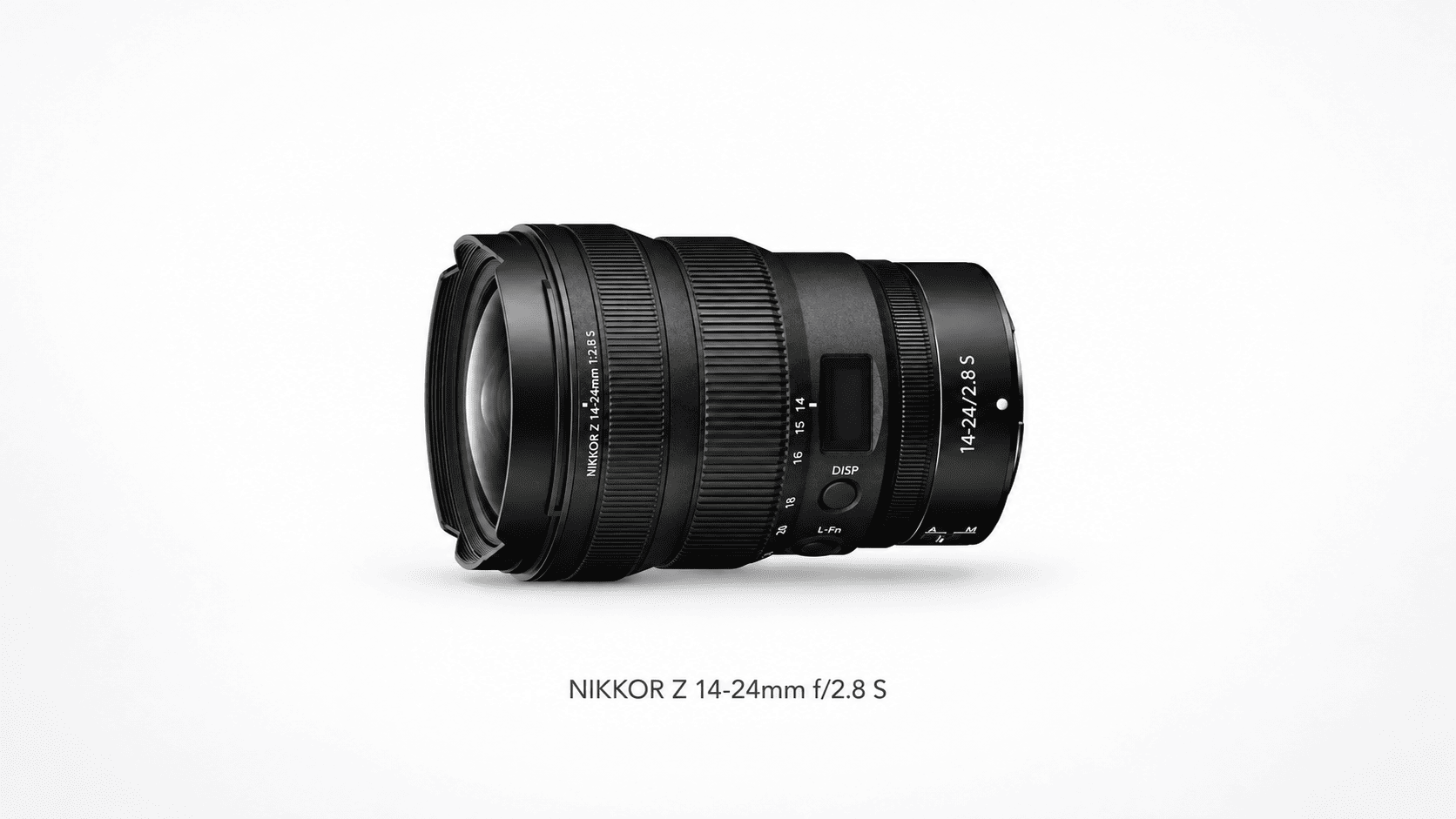
The NIKKOR Z 14-24mm f/2.8 S combines the same 14mm wide endpoint with a constant f/2.8 maximum aperture.
Nikon specifies the lens weight at approximately 650 g. The filtration system includes a front filter holder (supporting 112 mm filters when used with the appropriate lens hood) and a rear filter slot. These details are essential when budgeting for filters or balancing the weight of your complete camera rig.
Opening from f/4 to f/2.8 provides approximately one stop more light, which can allow a lower ISO at the same shutter speed if the shallower depth of field is acceptable. This can help with handheld photography or video. The wider aperture does not itself provide a wider angle of view.
Investing in this lens makes more sense if your scope extends beyond static shooting (such as standard real estate photography). If most of your projects are executed on a tripod with smaller working apertures, compare corrected images at your usual working aperture before paying extra solely for a larger maximum aperture.
NIKKOR Z 17-28mm f/2.8
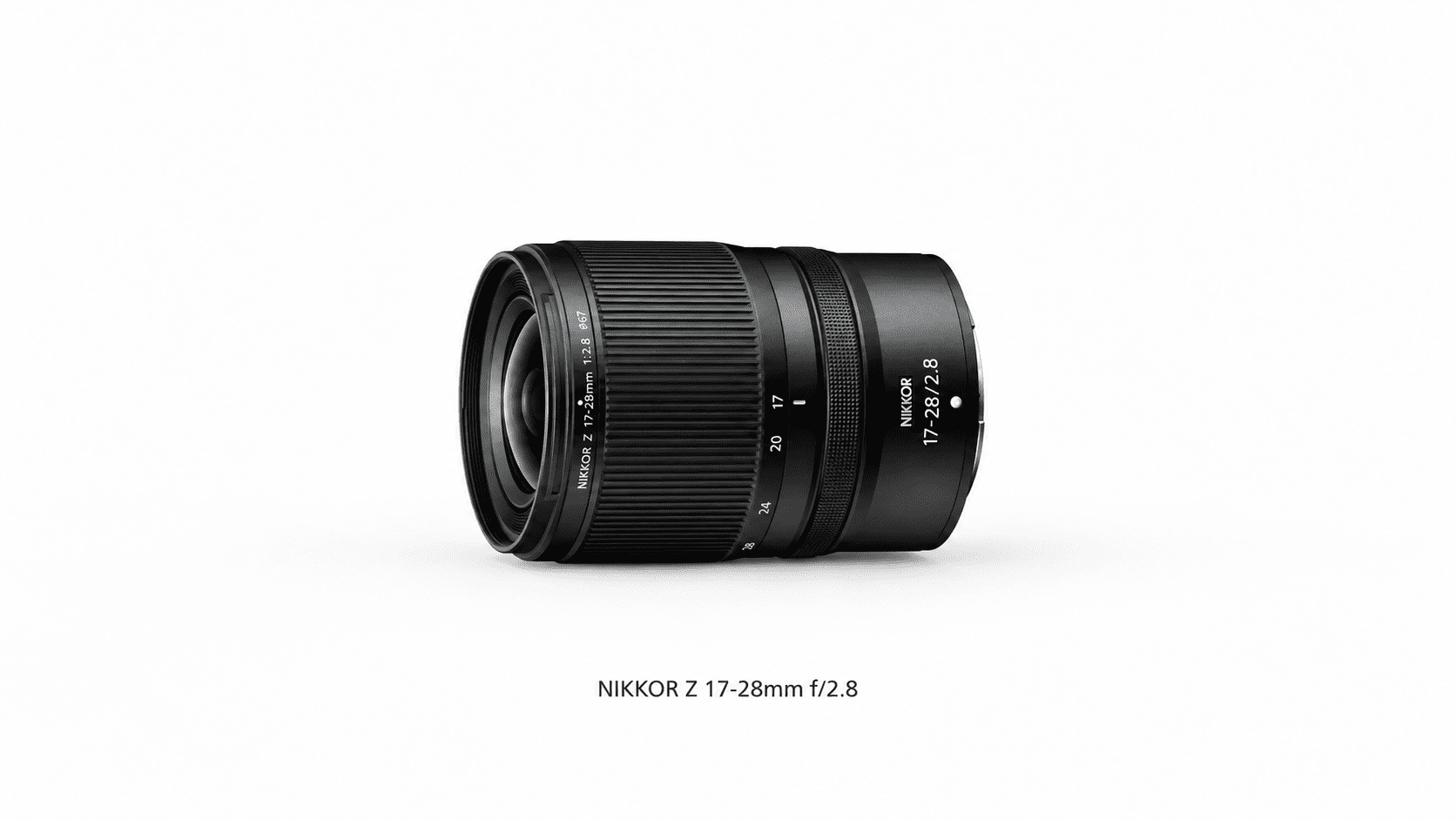
The NIKKOR Z 17-28mm f/2.8 offers a constant f/2.8 aperture in an approximately 450 g body with a 67 mm filter thread. It is lighter than either S-Line zoom above.
You should consider this option when versatility and a wider maximum aperture outweigh the need to reach a 14mm focal length. Its 67 mm filter thread may also suit filters you already own.
The main trade-off is its 17mm starting point. Check whether that provides enough coverage from the camera positions available in your typical interiors before choosing it as your only wide-angle zoom.
Which Nikon Z Lens Fits Your Real Estate Workflow?
Choosing the best Nikon Z lens for real estate photography starts with three priorities: interior coverage, aperture requirements and handling. The 14–30mm combines a 14mm starting point with a longer endpoint than the other two zooms; the 14–24mm pairs 14mm with f/2.8, while the 17–28mm offers a lighter f/2.8 package.
Interior Coverage and Framing Flexibility
The two lenses starting at 14mm provide a noticeably wider field of view in tight scenarios where stepping back is physically impossible. The 17–28mm may provide enough coverage where camera positions are flexible, but its 17mm starting point can be restrictive in tighter spaces.
At the telephoto end of the range, 30mm allows for tighter framing than 24mm. This reduces the need for lens swaps when transitioning from wide contextual overviews to isolated detail shots.
Avoid defaulting to the widest setting for every shot. Very wide framing, especially from a close camera position, can make foreground furniture dominate the image and stretch shapes near the edges. Choose a camera position and framing that represent the layout clearly.
Read more: Best Focal Length for Real Estate Photography
Maximum Aperture for Stills and Video
For static interiors on a tripod, both f/4 and f/2.8 lenses can be used at a shared working aperture, such as f/8. At the same working aperture, shutter speed and ISO, their nominal exposure is similar, although actual light transmission can differ. A wider maximum aperture alone does not provide an exposure advantage in that situation.
For video production, however, the dynamic changes. Shutter speed is often chosen according to frame rate and the desired motion blur, leaving less flexibility to lengthen the exposure. Raising ISO may increase visible noise. A larger maximum aperture provides additional exposure flexibility, provided the resulting depth of field aligns with your creative requirements.
When capturing real estate stills or video with wide-angle lenses on the Nikon Z system, evaluate the complete camera-and-lens setup as a single unit. Certain video recording modes and electronic image stabilization settings can crop the actual field of view; therefore, thoroughly verify your planned setup for the final deliverable.
Filters, Portability and Total Cost
Filter compatibility can directly impact your overall investment cost. For instance, the 14–30mm utilizes a standard 82 mm front thread, the 17–28mm takes a more compact 67 mm size, while the 14–24mm requires a distinctly different filter mounting system altogether.
Consequently, a filter you already own might attach seamlessly to one lens but require additional adapters or alternative setups on another. Include the hood, filter holder, bag space and gimbal-balancing requirements in your comparison.
Avoid relying on rigid budget assumptions; always check real-time market pricing at the moment of purchase. Promotional deals or the availability of pre-owned optics in excellent condition can easily shift which lens offers the best overall value.
Best Lens Options for Nikon Z DX Cameras
A full-frame lens can fit a Nikon Z DX camera without providing the same field of view it gives on full frame. Nikon’s approximately 1.5× DX crop factor makes sensor format essential to the buying decision.
NIKKOR Z DX 12-28mm f/3.5-5.6 PZ VR
.png)
The NIKKOR Z DX 12-28mm f/3.5–5.6 PZ VR is a compact native option for DX users. Nikon specifies an angle of view equivalent to approximately 18–42mm on full frame, with power zoom and optical Vibration Reduction.
Weighing approximately 205 g, this lens is significantly lighter than the full-frame zoom options mentioned earlier. Nikon explicitly targets interior photography as one of its primary use cases.
For real estate media, its main advantage lies in delivering an ultra-compact setup paired with a highly practical wide-angle reach. The power zoom feature enables smooth focal length adjustments during video capture, though it cannot substitute for dedicated stabilization gear or deliberate camera movement.
Its widest setting provides an angle of view equivalent to approximately 18mm on full frame, which is narrower than 14mm on a full-frame camera. You should test this optic in the tightest spaces of your typical workflow rather than assuming the "ultra-wide" designation automatically guarantees sufficient coverage for every interior.
When a Full-Frame Z Lens Makes Sense
Utilizing a full-frame Z-mount lens can be a sensible choice if you already own the optic, operate both FX (full-frame) and DX (crop) bodies, or plan to transition to a full-frame system in the near future.
However, note that on a DX body, a 14mm lens yields an equivalent field of view of 21mm, while a 17mm optic provides a 25.5mm equivalent coverage. This comparison applies strictly to the equivalent angle of view; the physical focal length of the lens remains unchanged.
For a dedicated DX interior kit, prioritize the coverage you need now, while considering whether a future move to full frame justifies the additional cost and weight.
Should You Replace Your Nikon F Lens or Keep Using FTZ?
Keeping an existing F-mount lens can be sensible when it already delivers suitable framing and image quality. Compare a native Z lens against your adapted setup in terms of coverage, handling, autofocus and total cost.
Nikon’s FTZ II compatibility information distinguishes between lens types. Supported AF-S, AF-P and AF-I lenses retain autofocus, while other categories have different restrictions. Do not assume every F-mount lens retains every function.
When comparing an adapted lens setup against a native mirrorless optic, evaluate key operational factors: adapter cost and integration, physical handling, overall lens condition, autofocus performance and reliability, and the usable field of view.
For instance, an existing adapted 16–35mm lens may already handle your daily real estate assignments effectively. Transitioning to a native 14–30mm Z-mount lens becomes compelling primarily if your work frequently demands a wider field of view or a more streamlined, compact rig. If your current adapted configuration meets all technical demands, replacing it may be far less critical than directing capital toward a heavy-duty tripod, backup body, or advanced lighting equipment.
What to Check in Sample Property Photos Before Buying
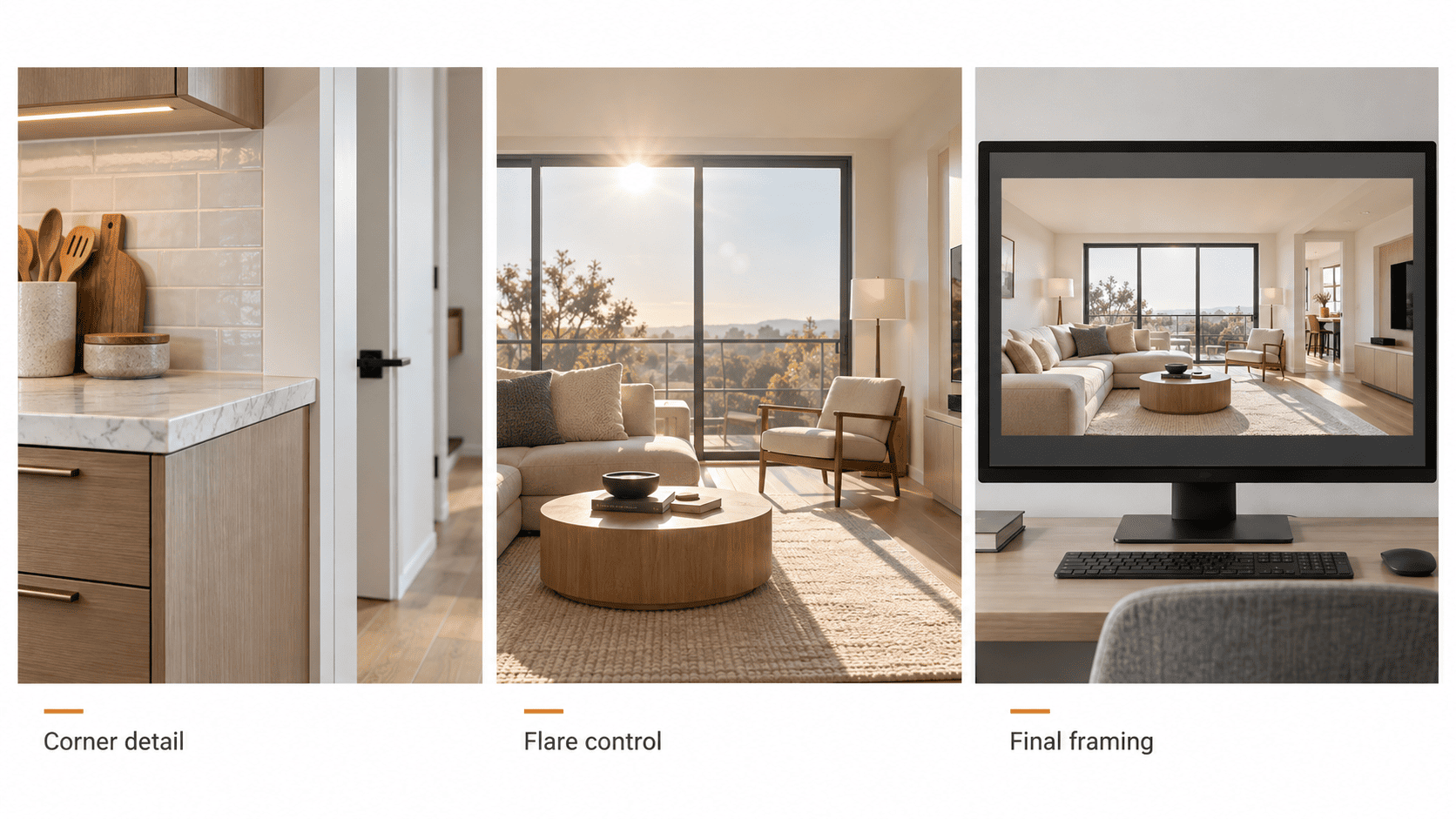
When choosing a Nikon mirrorless real estate lens, evaluate corrected files at the focal lengths and apertures you normally use. Compare lenses on the same camera at a shared focal length and working aperture, using the same processing and export size. Then test their widest settings separately to assess coverage. Review corner detail, flare and the framing retained after perspective correction.
Corner Detail After Lens Corrections
Check features near the edges: door frames, cabinetry, tile patterns and furniture. Look for usable detail across the image rather than judging only the center.
Adobe explains that lens profiles can correct common lens aberrations, including barrel and pincushion distortion. Confirm which corrections your software applies before comparing files.
Evaluate the result after your normal processing. A corner that looks acceptable in an uncorrected file may look different after geometric correction and cropping.
For additional examples, Cameralabs publishes separate 14–30mm f/4 S and 14–24mm f/2.8 S image-quality tests. Their results are evidence from their test conditions, not a guarantee for every lens sample or assignment.
Flare Around Windows and Interior Lights
Test scenes with bright windows, exposed lights and strong light sources just outside the frame. Watch closely for ghosting, contrast degradation, and color artifacts—particularly when a strong light source sits near the edge of your frame.
If you are renting a lens, capture the same composition while making subtle adjustments to your camera position. This approach helps determine whether a flare artifact is easily avoidable or if it will repeatedly show up in your standard framing.
Keep your testing practical. A lens does not need to be entirely flare-free; the critical factor is whether it yields acceptable, client-ready images under the lighting conditions you regularly encounter in your daily work.
Framing After Perspective Correction
An image may require perspective alignment during post-processing. When perspective correction is likely, leave space around important features and check that they remain within the final crop.
For example, compare a shot taken at 14mm against one taken at 17mm from the exact same camera placement. Apply your standard perspective correction workflow to both files, then evaluate the final cropped results. This practical test is far more informative than simply comparing focal length numbers on paper.
Furthermore, distinguish between optical distortion and perspective convergence. Curvature introduced by lens distortion and converging vertical lines caused by camera tilt require entirely different correction techniques. Purchasing a wider lens does not mean vertical lines will automatically remain parallel.
Read more: Best Lenses for Real Estate Photography in 2026
Frequently Asked Questions
What Is the Best Budget Nikon Z Lens for Real Estate Photography?
For full-frame users, compare current prices for the 17–28mm f/2.8 and 14–30mm f/4 S, including used options where appropriate. The better value depends on whether 17mm provides sufficient coverage. For DX users, the DX 12–28mm is a more relevant native starting point.
Is 17mm Wide Enough for Real Estate Interiors?
Sometimes. On full frame, 17mm can work where the camera position provides sufficient coverage. It may be restrictive in confined spaces. On Nikon DX, it gives approximately a 25.5mm-equivalent field of view, so it should not be treated as equivalent to 17mm on full frame.
Do You Need f/2.8 for Property Photography?
No. Tripod-based photographs of static interiors can often be captured using longer exposures and an aperture selected for depth of field. F/2.8 becomes more valuable when you need additional light for handheld photography, video or other assignments.
Is the Nikon Z 14-30mm Suitable for Property Videos?
It can be. Its range provides flexible framing, but suitability depends on the camera, recording mode, stabilization setup and lighting. Test the actual video configuration because additional crop can reduce coverage, and f/4 may require a higher ISO than f/2.8 in the same light.
Can a Nikon Z 24-70mm Replace an Ultra-Wide Lens?
It can handle many exteriors, details and some spacious interiors, but 24mm may not provide enough coverage when camera placement is restricted. Treat it as a complementary lens unless you have confirmed that its widest setting covers your normal assignments.
Conclusion
For photographers primarily producing full-frame listing stills, the NIKKOR Z 14–30mm f/4 S is our recommended starting point. Choose the 14–24mm f/2.8 S when you need both 14mm coverage and a wider maximum aperture. Consider the 17–28mm f/2.8 when its narrower view meets your needs and portability matters.
The best Nikon Z lens for real estate photography is the one that delivers the required framing and usable image quality within your complete production workflow. Test corrected files, account for filters and accessories, and confirm sensor compatibility before purchasing.
Lens choice establishes what you capture. Consistent editing helps turn those files into a cohesive gallery. Rotider’s photo-editing services can support that final stage while photographers concentrate on composition, lighting and accurate property coverage.

-1.png)


 (1).png)
.png)